

The electrification of military vehicle fleets presents a critical infrastructure decision that will impact your base's operational readiness for decades. Your choice between off-grid and grid-tied EV charging stations directly affects energy security, operational costs, and mission continuity during emergencies.
Military installations across the United States are rapidly adopting electric vehicle technology, with the Defense Innovation Unit already deploying nearly 120 new EV charging facilities at 10 locations. Your base's unique operational requirements, geographic location, and strategic priorities will determine which charging infrastructure best serves your mission objectives.
Understanding Off-Grid EV Charging Systems
Off-grid charging stations operate independently from the civilian electrical grid, typically combining solar panels with battery storage systems to create completely autonomous charging infrastructure. These systems provide unmatched energy independence, ensuring your vehicles remain operational even when external power sources fail.
The primary advantage of off-grid systems lies in their disaster preparedness capabilities. When natural disasters or security threats compromise the electrical grid, your off-grid charging stations continue functioning without interruption. This operational continuity proves invaluable during emergency response scenarios where vehicle availability directly impacts mission success.
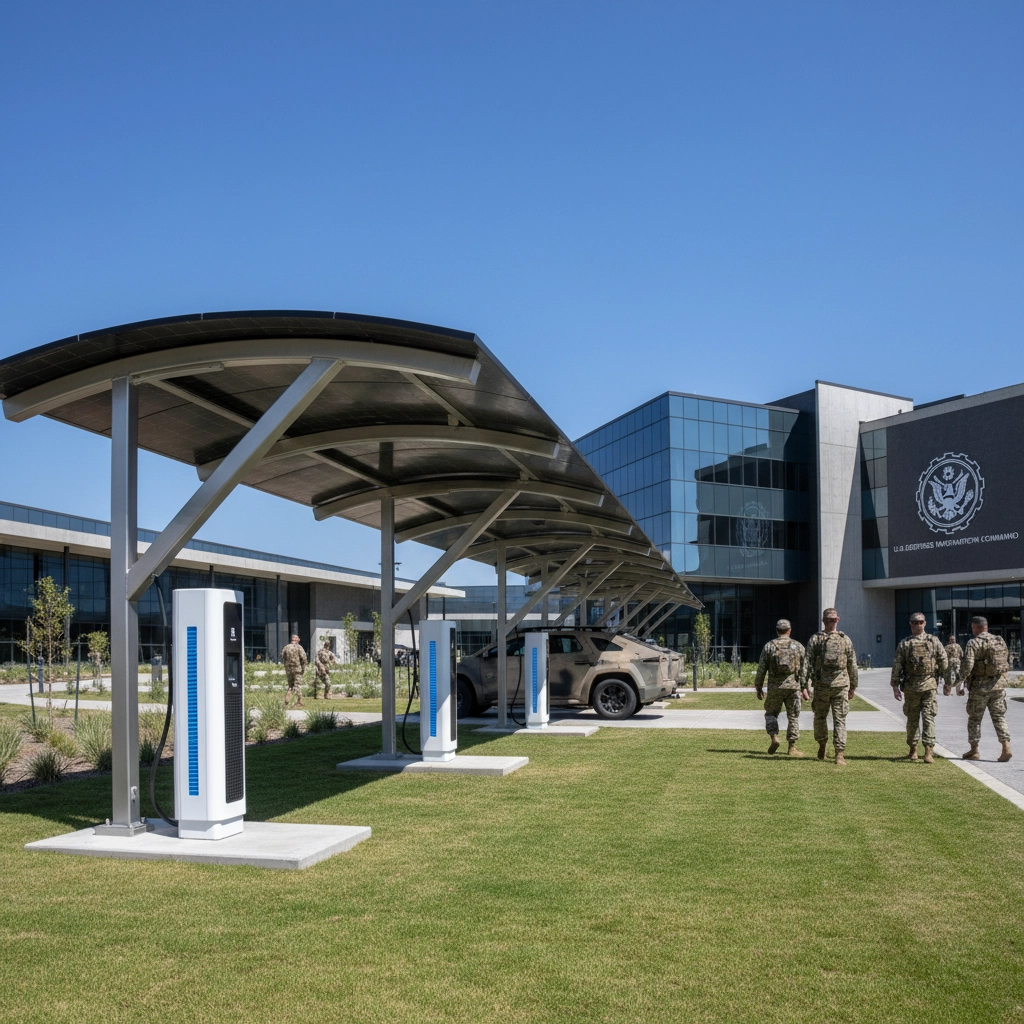
Your off-grid installation can be deployed in remote locations without existing electrical infrastructure, expanding your strategic positioning options. These systems excel in forward operating bases, training facilities in remote areas, and installations where grid connection proves impractical or strategically inadvisable.
However, off-grid systems require substantial upfront investment due to battery storage components and solar panel arrays. Weather dependency presents another consideration: extended periods of cloud cover or extreme weather conditions can impact charging capacity. Regular maintenance requirements include solar panel cleaning, battery health monitoring, and system software updates.
The charging capacity limitations of off-grid systems may affect larger military vehicles with high-capacity batteries. Battery storage systems can limit charging speed and may not fully charge the largest EV batteries without extended charging periods.
Evaluating Grid-Tied EV Charging Infrastructure
Grid-tied systems connect directly to existing electrical infrastructure, offering proven deployment models that military installations have successfully implemented. The Department of Defense has established effective Government Owned/Contractor Operated (GOCO) and Contractor Owned/Contractor Operated (COCO) frameworks that streamline installation and operation.
Your grid-tied charging stations deliver consistent, high-speed charging regardless of weather conditions. Level 2 charging stations can fully charge most military vehicles in 5-6 hours, compared to 24+ hours required by standard electrical outlets. This efficiency supports rapid vehicle turnaround for operational requirements.
Lower initial investment costs make grid-tied systems attractive for large-scale fleet electrification projects. Without expensive battery storage requirements, you can deploy more charging points across your installation within existing budget constraints. Scalability becomes straightforward as you expand charging infrastructure to meet growing fleet requirements.
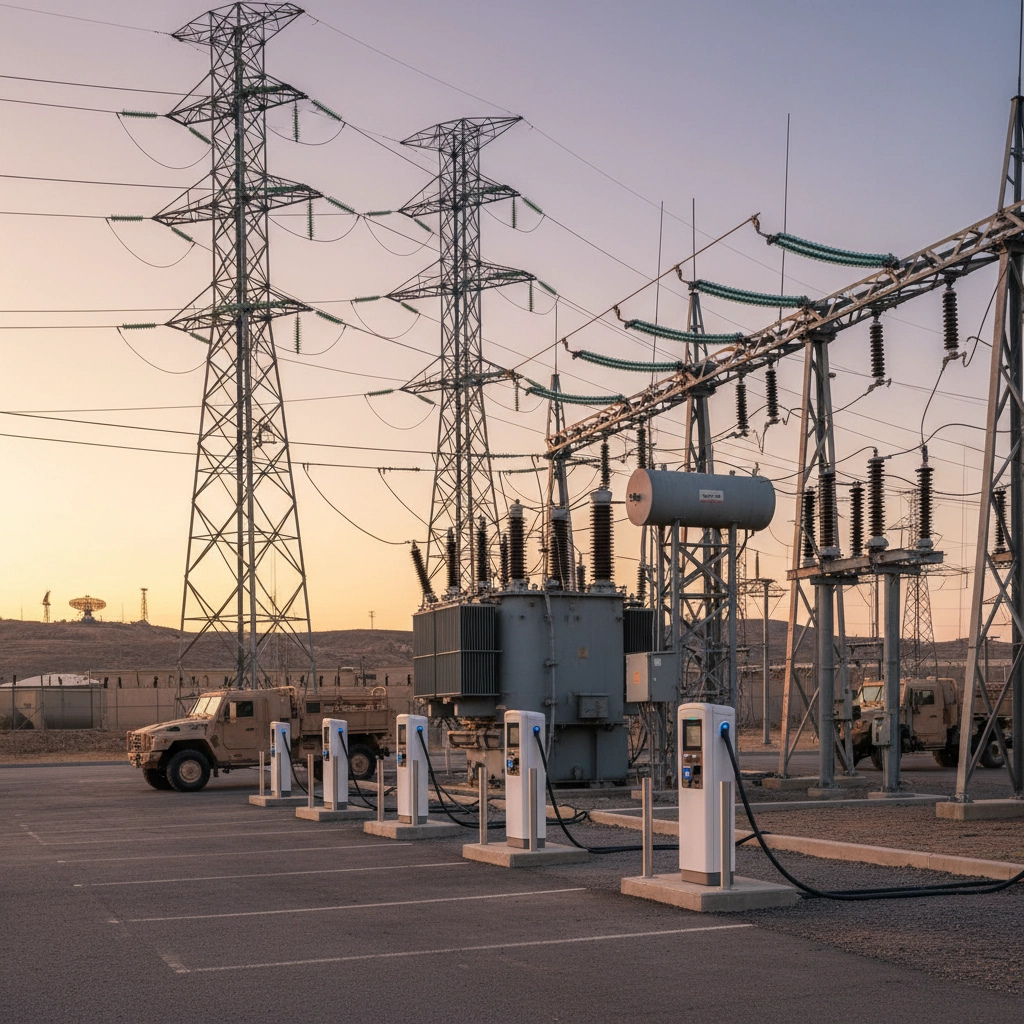
Successful military housing programs demonstrate grid-tied system effectiveness. Installations like Barksdale Air Force Base and Fort Sam Houston have implemented pilot programs where service members pay for their own charging usage, creating sustainable operational models that reduce government expenses.
The primary limitation of grid-tied systems centers on their dependency on external electrical infrastructure. Power outages and grid failures eliminate charging capability precisely when vehicle availability becomes most critical. Security concerns arise from reliance on civilian power infrastructure that adversaries might target during conflicts.
Critical Decision Factors for Your Base
Your installation's geographic location significantly influences the optimal charging solution. Bases in remote areas with unreliable grid infrastructure benefit more from off-grid independence, while installations with robust electrical infrastructure can leverage grid-tied efficiency.
Mission requirements determine acceptable risk levels for external dependencies. Combat-ready installations prioritizing maximum operational security favor off-grid solutions, while training facilities and administrative bases may prioritize cost-effectiveness through grid-tied systems.
Budget considerations extend beyond initial installation costs to long-term operational expenses. Off-grid systems require higher upfront investment but eliminate ongoing electricity costs, while grid-tied systems spread costs over time through utility payments.
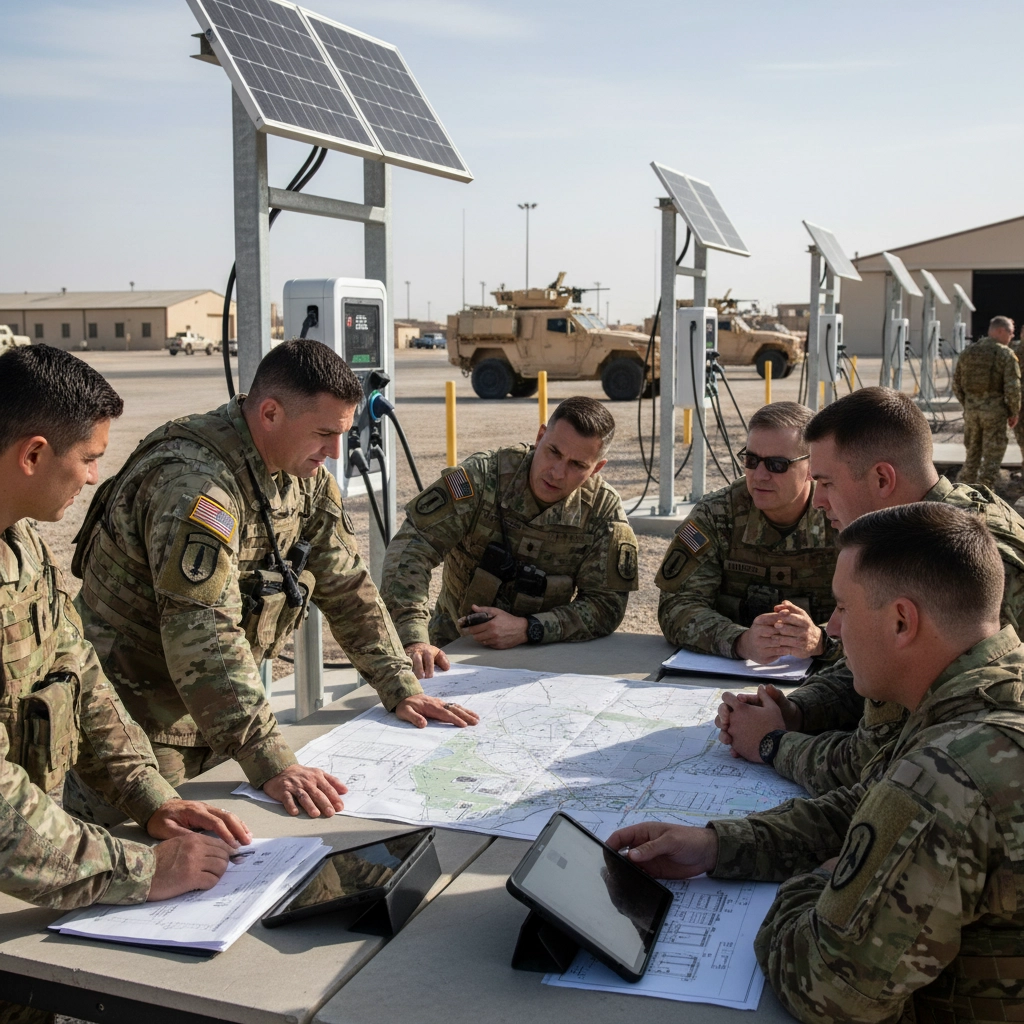
Your maintenance capabilities influence system selection. Off-grid systems demand specialized knowledge for solar panel and battery maintenance, while grid-tied systems require primarily standard electrical maintenance procedures. Assess your current maintenance staff capabilities and training requirements for each option.
Fleet composition affects charging infrastructure requirements. Larger military vehicles with high-capacity batteries may overwhelm off-grid battery storage systems, while smaller vehicle fleets operate effectively with either system type.
Strategic Implementation Approaches
Consider implementing a hybrid approach that leverages both system types strategically across your installation. Deploy grid-tied systems for high-volume, routine charging operations while installing off-grid stations at critical facilities requiring guaranteed charging capability during emergencies.
Position off-grid charging stations at command centers, emergency operations facilities, and medical facilities where vehicle availability during crises proves essential. These strategic locations maintain operational capability when grid failures occur.
Install grid-tied systems in administrative areas, housing complexes, and non-critical facilities where cost-effectiveness outweighs energy independence concerns. This approach maximizes charging availability while managing overall infrastructure investment.
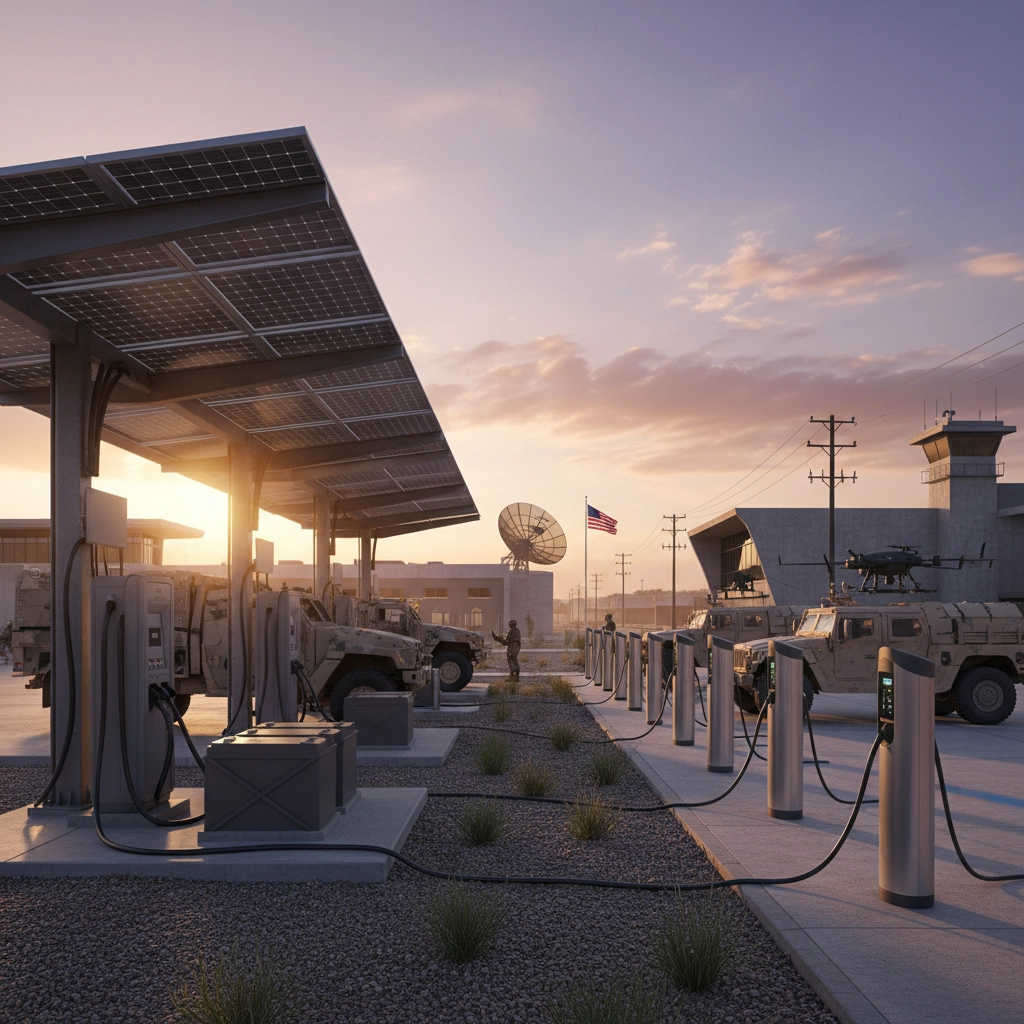
Your phased implementation strategy should begin with critical infrastructure assessment. Identify facilities requiring guaranteed charging capability during emergencies, then design off-grid solutions for these locations. Simultaneously, plan grid-tied systems for remaining areas to maximize overall charging capacity within budget constraints.
Develop contingency plans that account for both system types. Off-grid systems require backup maintenance procedures for extended cloudy periods, while grid-tied systems need emergency protocols for grid failures. Your operational plans must address charging prioritization during capacity limitations.
Making Your Final Selection
Your base's unique operational profile determines the optimal charging infrastructure solution. Prioritize off-grid systems when energy independence and disaster preparedness outweigh cost considerations. Choose grid-tied systems when budget constraints and rapid deployment requirements take precedence over energy autonomy.
Evaluate vendor capabilities and support structures for your chosen system type. Off-grid systems require vendors with solar and battery expertise, while grid-tied systems need electrical infrastructure specialists. Assess long-term support availability and component replacement timelines.
Consider future expansion requirements in your current decision. Off-grid systems prove more expensive to scale, while grid-tied systems accommodate growth more economically. Your 10-year fleet electrification projections should influence today's infrastructure choices.
The Department of Defense's successful deployment of grid-tied systems at multiple installations demonstrates proven operational models, while off-grid systems provide unmatched energy security for strategic applications. Your selection should align with your installation's primary mission requirements and acceptable risk tolerance.
Both off-grid and grid-tied systems serve essential roles in military EV infrastructure. Your careful evaluation of operational requirements, budget constraints, and strategic priorities will guide you toward the charging solution that best serves your base's long-term mission success.

