

Most people think EV charging in remote wilderness areas is impossible… until they see solar carports powering electric vehicles 100 miles from the nearest power line.
America's national forests are embracing a revolutionary approach to sustainable transportation that's changing how we think about wilderness mobility. You're about to discover how cutting-edge solar charging technology is enabling electric vehicles to venture deeper into our most remote natural areas while actually improving environmental protection.
The Remote Charging Revolution
Your ability to explore America's vast wilderness with electric vehicles no longer depends on finding the nearest power outlet. The U.S. Forest Service has pioneered solar-powered, grid-independent charging stations that operate entirely off renewable energy in locations where traditional electrical infrastructure would be prohibitively expensive or environmentally disruptive.
The Wolf Creek Job Corps Civilian Conservation Center in Oregon's Umpqua National Forest demonstrates this breakthrough technology. Their solar-powered EV charging station requires zero connection to the electrical grid, eliminating the need for trenching, permitting, construction, or utility hookups that would typically cost hundreds of thousands of dollars in remote locations.
How Off-Grid Solar Charging Works in Wilderness Settings
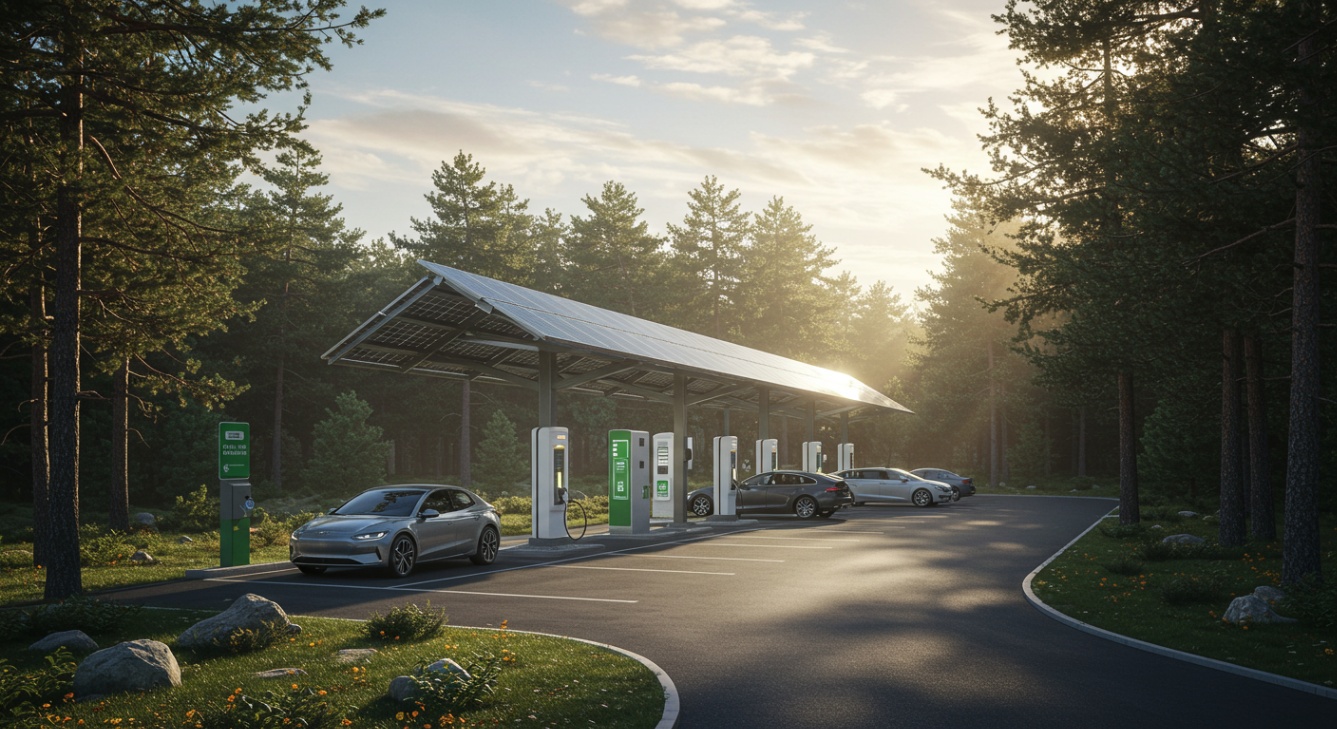
You'll find these innovative systems arrive on a single flatbed trailer and assemble on-site with minimal landscape disruption. The overhead photovoltaic canopy provides 100% renewable power while the system's base creates a stable parking platform. Charging cords reach up to five adjacent spaces, supporting everything from plug-in hybrids to full battery electric vehicles.
The transportable design offers unprecedented flexibility. Forest Service managers can redeploy systems to different locations based on seasonal needs, emergency response requirements, or changing recreational patterns. This mobility maximizes infrastructure investment while adapting to the dynamic needs of wilderness management.
Expanding Access for Park Rangers and Visitors
Your wilderness experience transforms when electric vehicles can travel deeper into remote areas with confidence. Park rangers benefit from silent, emission-free operation during wildlife monitoring, fire prevention patrols, and visitor assistance. The elimination of engine noise reduces wildlife disturbance while zero local emissions preserve air quality in pristine environments.
Mount Hood National Forest hosts the nation's first DC fast charger on Forest Service land, located at Mount Hood Skibowl West. This installation connects to the West Coast Electric Highway network and completes Oregon's Mount Hood-Columbia River Gorge Electric Byway, demonstrating how national forests integrate into regional EV infrastructure.
Environmental Benefits Beyond Carbon Reduction
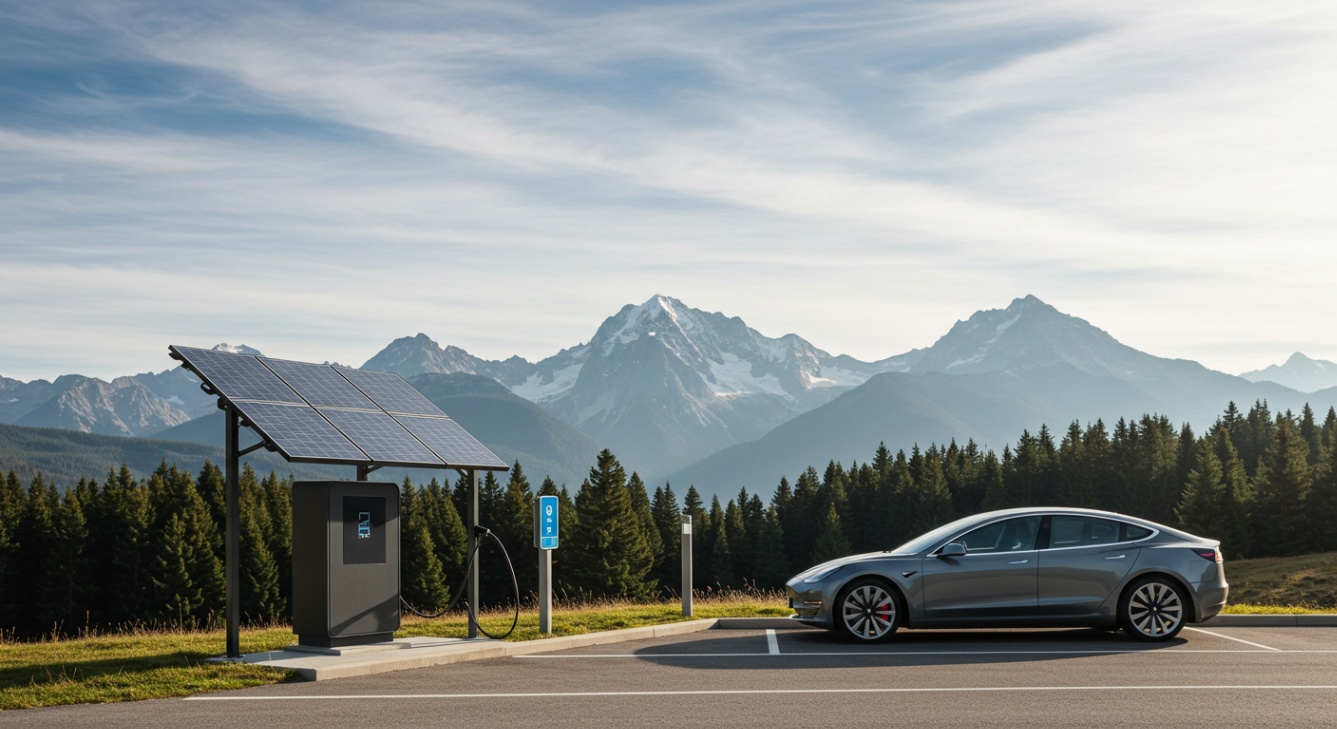
You're witnessing a transformation that extends far beyond simple emissions reduction. Solar-powered charging stations eliminate diesel generator noise that can disturb wildlife for miles around remote facilities. The reduction in fuel transportation to remote locations decreases road traffic, erosion, and accident risks on narrow mountain roads.
Forest Service operations benefit from predictable energy costs while meeting federal sustainability requirements outlined in Executive Order 14057. On-site solar generation reduces dependence on fossil fuel deliveries that become expensive and logistically challenging during winter weather or fire season road closures.
Cost-Effective Infrastructure for Remote Locations
You'll discover that solar charging systems offer significant economic advantages over traditional grid connections in wilderness areas. The elimination of trenching and utility infrastructure reduces installation costs by up to 75% in remote locations. Labor expenses drop dramatically when complex permitting and environmental impact assessments for electrical lines become unnecessary.
Maintenance requirements remain minimal with modern solar systems designed for harsh weather conditions. Battery backup systems ensure charging availability during severe weather when solar production may be limited, while propane generator backup provides additional reliability for critical operations.
Supporting Wildlife Conservation Efforts
Your impact on wildlife conservation increases when research teams, biologists, and conservation officers can access remote areas without noise pollution or emissions. Electric vehicles enable closer wildlife observation and data collection while sophisticated monitoring equipment operates more effectively without engine interference.
Trail maintenance crews benefit from electric equipment that operates silently during sensitive breeding seasons or migration periods. The combination of electric vehicles and solar charging infrastructure supports conservation goals while enabling necessary human activities in protected areas.
Enhancing Visitor Education and Experience
You can expect educational opportunities that demonstrate sustainable technology in action. Solar charging stations become interactive displays showing renewable energy principles, energy storage concepts, and sustainable transportation solutions. Visitors witness firsthand how technology can support conservation rather than compromise natural environments.
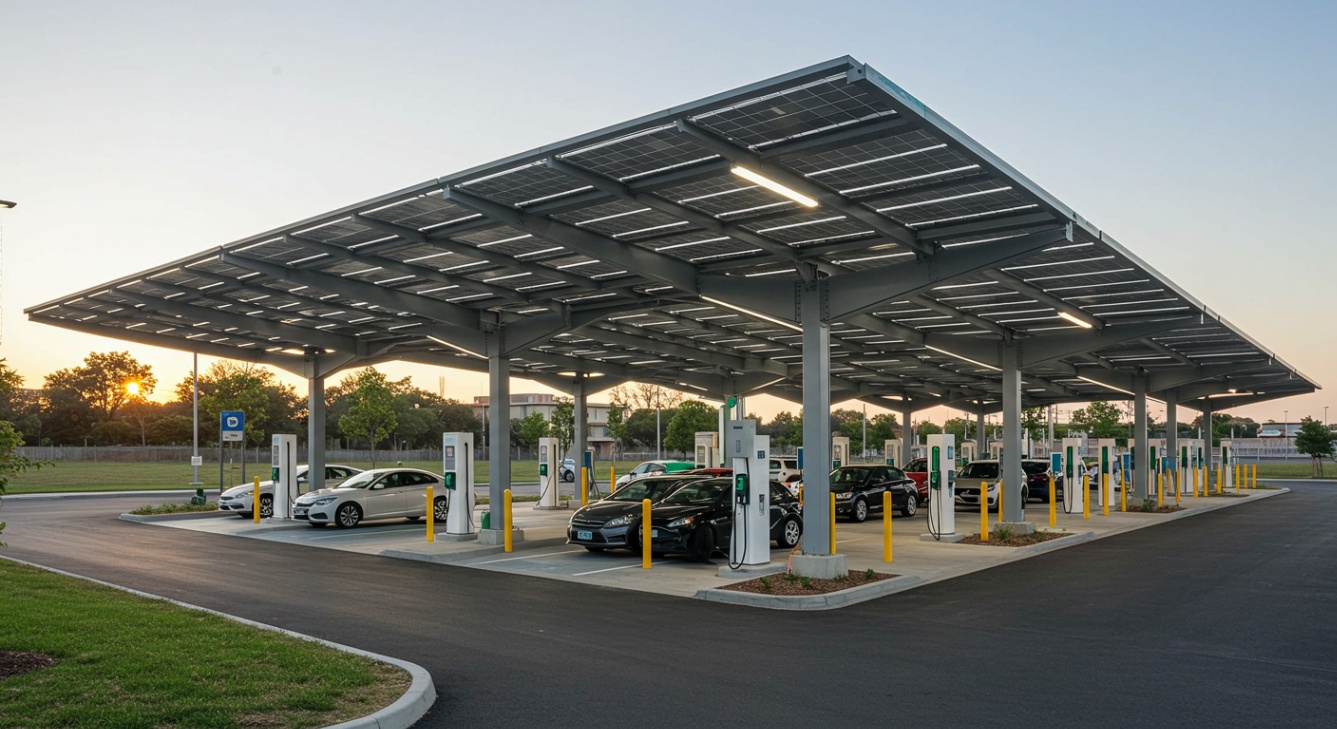
The visual integration of charging infrastructure with natural landscapes requires careful design consideration. Modern solar carports incorporate materials and colors that complement forest settings while providing weather protection for vehicles and charging equipment.
Preparing for Climate Change Adaptation
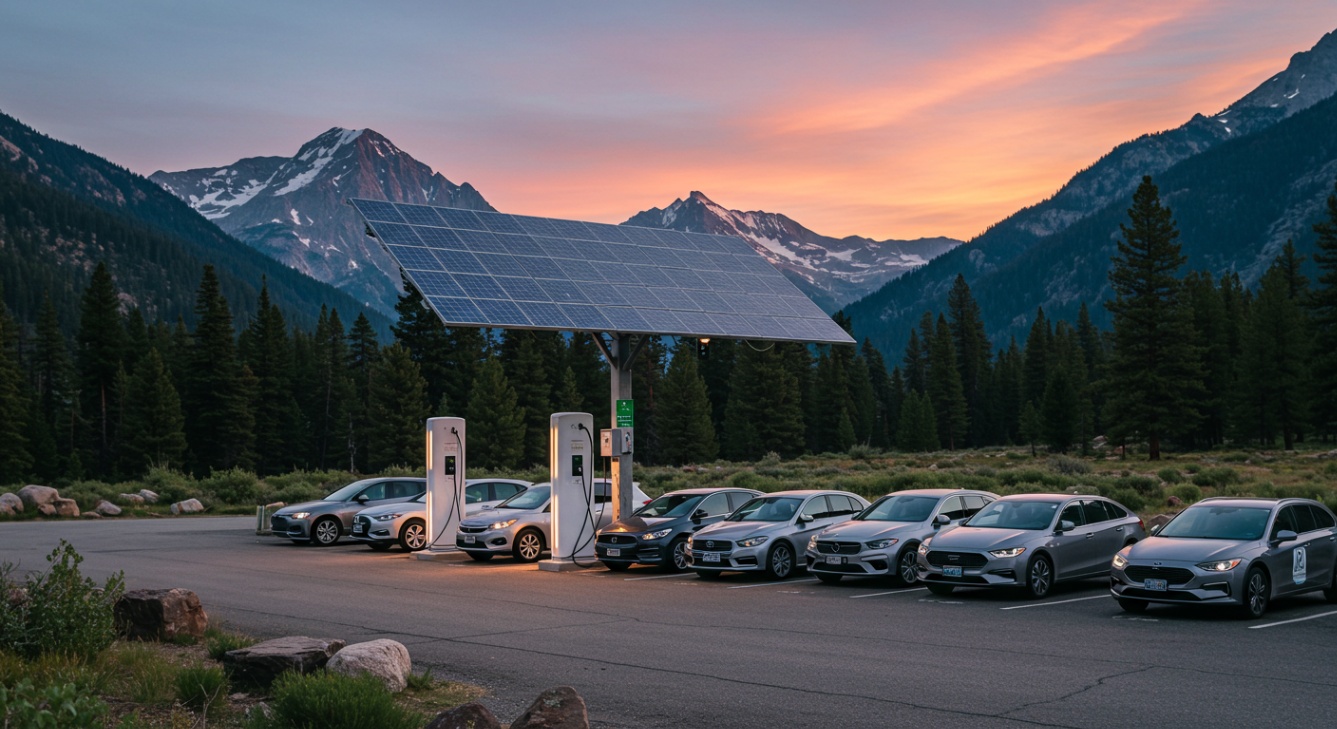
You're seeing infrastructure that enhances forest resilience during climate-related emergencies. Solar charging stations provide power for communication equipment, emergency lighting, and critical operations when grid power fails during severe weather events. Electric vehicles enable evacuation support and emergency response without depending on fuel deliveries that may be disrupted.
The distributed nature of solar charging reduces vulnerability to single-point failures that affect centralized electrical systems. Multiple charging locations create redundancy that supports continuity of operations during extended emergency responses.
Future Expansion and Technology Integration
You can anticipate rapid expansion of solar charging networks as technology costs continue decreasing and installation processes become more streamlined. Advanced battery storage systems will extend charging availability during extended cloudy periods while smart charging management optimizes energy use based on weather forecasts and usage patterns.
Integration with existing Forest Service communication networks will enable remote monitoring, predictive maintenance, and usage analytics that optimize system performance. Mobile applications will provide real-time charging availability and reservation capabilities for both staff and visitors.
The success of pilot installations in Oregon and other western states provides a blueprint for nationwide expansion. Forest Service managers are evaluating hundreds of potential locations where solar charging stations could support both operational needs and recreational access while maintaining environmental integrity.
Your exploration of America's wilderness areas is entering a new era where sustainable technology enhances rather than compromises natural experiences. Solar-powered EV charging represents the convergence of conservation values with practical transportation needs, proving that environmental protection and modern mobility can advance together.
This infrastructure investment supports the transition to clean transportation while preserving the pristine character of our national forests for future generations. The combination of renewable energy, electric mobility, and careful environmental stewardship creates a sustainable model for wilderness access that other countries are beginning to emulate.

