

The electric vehicle revolution presents an unprecedented opportunity for municipal leaders to transform their communities while driving economic growth. As a mayor, you hold the key to leveraging EV infrastructure as a catalyst for business development, job creation, and community revitalization. Over 350 mayors across the nation have already committed to ambitious electrification targets, recognizing that strategic EV infrastructure development delivers both environmental benefits and tangible economic returns.
Your success in this endeavor depends on implementing a systematic approach that aligns infrastructure development with economic development goals. The five steps outlined below provide a comprehensive framework for transforming EV charging stations from simple utilities into powerful engines of local economic growth.
Step 1: Conduct a Strategic Economic Impact Assessment
Begin your EV infrastructure journey by performing a thorough analysis that identifies both current gaps and future economic opportunities. Your assessment must go beyond basic charging needs to examine how strategic placement can maximize business impact and community benefits.
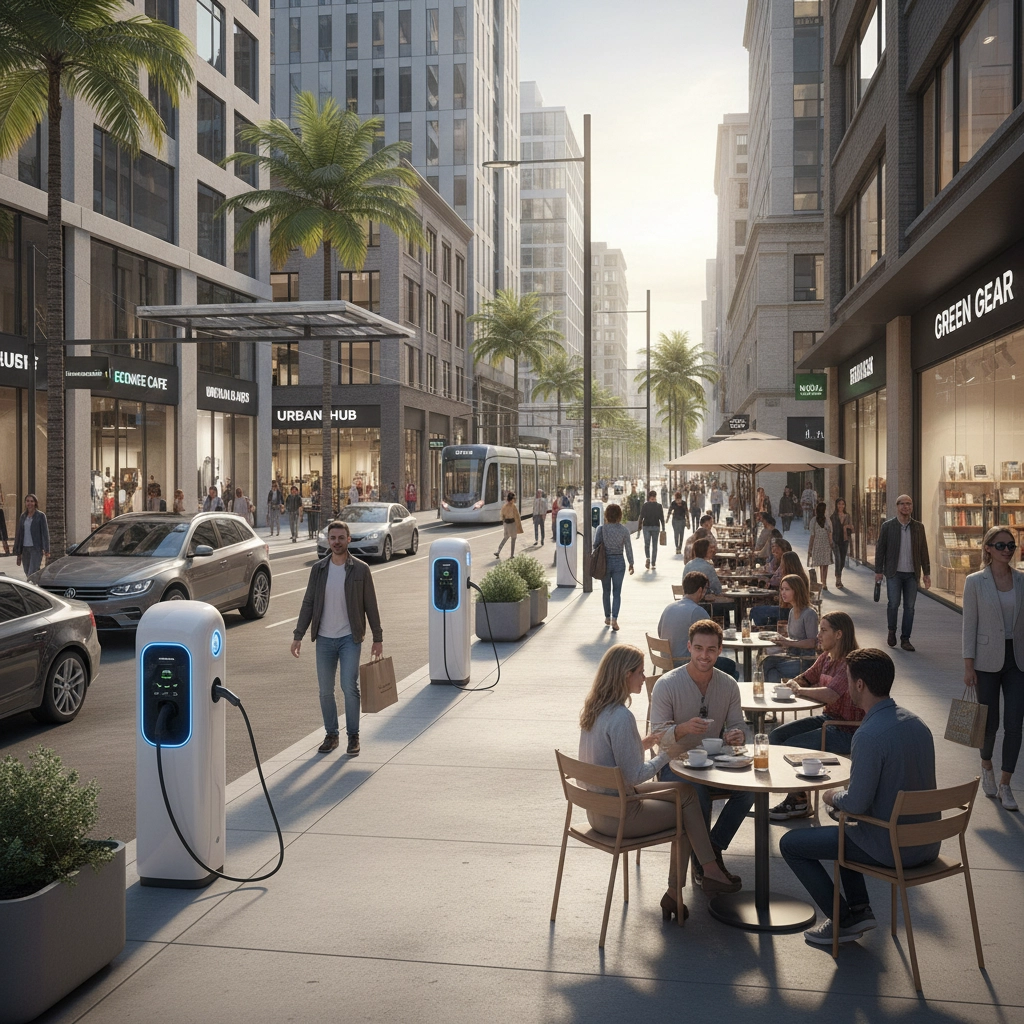
Focus your analysis on high-traffic commercial areas where EV drivers naturally combine charging activities with shopping, dining, or entertainment. Target locations near restaurants, retail centers, parks, recreational facilities, and tourism attractions where extended dwell times create opportunities for local spending. These strategic locations transform necessary charging stops into economic activity generators.

Examine your community's workforce development needs and identify potential job creation opportunities in installation, maintenance, and operation of charging infrastructure. Calculate the multiplier effects of infrastructure investment, including construction jobs, ongoing maintenance positions, and indirect employment in supporting businesses.
Your assessment should also evaluate current zoning regulations, parking requirements, and utility capacity constraints that could impact development costs or timelines. Document existing business districts that could benefit from increased foot traffic and identify underutilized commercial areas where EV infrastructure could serve as an anchor for revitalization efforts.
Create detailed projections of EV adoption rates in your community based on demographic data, income levels, and existing vehicle registration patterns. This data-driven approach ensures your infrastructure investments align with actual demand while positioning your community ahead of the adoption curve.
Step 2: Develop a Comprehensive Funding and Incentive Strategy
Construct a multi-layered funding approach that leverages federal grants, state incentives, and local economic development tools to minimize municipal investment while maximizing economic impact. Government funding for EV infrastructure is available through various loans and grants that specifically support job creation and domestic production of charging components.
Establish block grant programs that incentivize private sector investment in commercially viable locations. Structure these programs to require minimum investment commitments from participating businesses, ensuring that public funding generates proportional private sector engagement. Consider offering reduced permitting fees, expedited approvals, or tax increment financing for projects that meet specific economic development criteria.
Partner with your utility company to develop time-of-use rates and demand response programs that make commercial charging more economically attractive. These partnerships can reduce infrastructure costs while creating revenue opportunities for both the municipality and private sector partners.
Design your incentive programs to prioritize developments that create permanent jobs, support existing businesses, or anchor new commercial development. Avoid simply subsidizing charging stations without requiring measurable economic commitments from developers or property owners.

Create performance-based incentive structures that tie ongoing support to demonstrated economic outcomes such as job creation, tax revenue generation, or increased commercial activity in targeted areas. This approach ensures that public investment produces lasting economic benefits rather than one-time infrastructure improvements.
Step 3: Streamline Regulatory Processes and Remove Development Barriers
Transform your permitting and regulatory framework to accelerate EV infrastructure development while maintaining appropriate oversight and safety standards. Implement clear, predictable approval processes that provide developers with definitive timelines and requirements.
Review your zoning ordinances and parking requirements to identify regulations that unnecessarily complicate or prevent charging station installation. Many communities have outdated parking ratios or setback requirements that make charging infrastructure economically unfeasible in prime commercial locations.
Develop fast-track permitting procedures for charging installations that meet pre-approved design standards and location criteria. Create standardized application processes that reduce administrative burden for both developers and municipal staff while ensuring consistent quality and safety standards.
Establish clear guidelines for utility interconnection, electrical permits, and construction requirements. Coordinate with your utility company to pre-approve standard installation configurations and streamline the interconnection process for qualifying projects.
Consider implementing "charging-ready" requirements for new commercial construction that require electrical infrastructure capable of supporting future charging stations. These proactive measures reduce future installation costs while positioning new developments to capture EV-related business opportunities.
Step 4: Build Strategic Public-Private Partnerships
Forge collaborative relationships with local businesses, utility companies, and charging station providers that create mutually beneficial economic arrangements. Successful partnerships align public infrastructure investment with private sector business objectives while maximizing community economic impact.
Work with existing businesses to identify locations where charging stations can drive customer traffic and extend visit durations. Restaurants, shopping centers, entertainment venues, and hotels represent natural partners whose business models benefit from longer customer dwell times that EV charging naturally provides.
Engage with councils of governments, regional planning organizations, and economic development agencies to coordinate infrastructure development across municipal boundaries. Regional coordination maximizes the impact of limited funding while creating charging networks that support economic development across broader geographic areas.
Establish revenue-sharing agreements with private partners that provide ongoing funding for maintenance and expansion while ensuring that public investment generates returns for the community. Structure these agreements to incentivize high-quality customer service and reliable equipment operation.
Create business development programs that help existing companies integrate EV charging into their customer service offerings. Provide technical assistance and marketing support to help businesses maximize the economic benefits of hosting charging infrastructure.
Partner with major employers to develop workplace charging programs that support economic development by making your community more attractive to businesses considering relocation or expansion. Workplace charging programs demonstrate municipal commitment to supporting business operations while reducing employee transportation costs.
Step 5: Implement Monitoring and Optimization Systems
Establish comprehensive oversight mechanisms that track both infrastructure performance and economic impact to ensure your EV investments deliver measurable community benefits. Create working groups that include mayors, municipal staff, business representatives, and economic development organizations to provide ongoing guidance and prevent duplication of effort.
Develop key performance indicators that measure economic outcomes such as job creation, tax revenue generation, business formation, and commercial activity in areas served by charging infrastructure. Regular monitoring allows you to identify successful strategies and adjust programs based on actual results.

Implement data collection systems that track charging station utilization, peak usage times, and user demographics to optimize location planning and inform future investment decisions. Understanding usage patterns helps you identify opportunities for additional commercial development and refine your economic development strategy.
Create feedback mechanisms that allow businesses and community members to report issues, suggest improvements, and propose new development opportunities. Community engagement ensures that your EV infrastructure program continues to evolve in response to changing needs and opportunities.
Conduct annual assessments that evaluate the economic impact of your EV infrastructure investments and identify areas for program expansion or modification. Use this data to secure additional funding and demonstrate the value of continued investment to elected officials and community stakeholders.
Establish coordination protocols with neighboring municipalities to create regional charging networks that support economic development across broader geographic areas. Regional collaboration maximizes the impact of individual municipal investments while creating economic opportunities that transcend local boundaries.
The strategic development of EV infrastructure represents a transformative opportunity for municipal leaders to drive economic growth while supporting environmental sustainability. By following these five steps, you position your community to capture the economic benefits of the electric vehicle transition while building infrastructure that supports long-term prosperity and competitiveness.

