

Government agencies across the nation face a critical decision when modernizing their infrastructure and meeting sustainability mandates. You have two compelling options: pursue NEVI funding for electric vehicle charging infrastructure or invest in solar carports that combine renewable energy with parking solutions. Each path offers distinct advantages, but the right choice depends on your agency's specific circumstances, budget constraints, and long-term objectives.
Understanding these options thoroughly will position your agency to make an informed decision that maximizes both immediate impact and future benefits. The choice you make today will influence your operational costs, environmental footprint, and community service capabilities for decades to come.
Understanding NEVI Funding for Government Agencies
The National Electric Vehicle Infrastructure (NEVI) Program represents a significant federal investment in America's charging network, offering substantial financial support for qualified projects. This program provides federal grants covering up to 80% of project costs, requiring only a 20% cost share from participating agencies.
NEVI funding targets strategic infrastructure development along Federal Highway Administration designated Alternative Fuel Corridors. Your charging stations must maintain no more than 50-mile gaps between installations, ensuring comprehensive coverage across critical transportation routes. The program mandates specific technical requirements, including minimum 150kW per port capacity and four-port minimum installations.
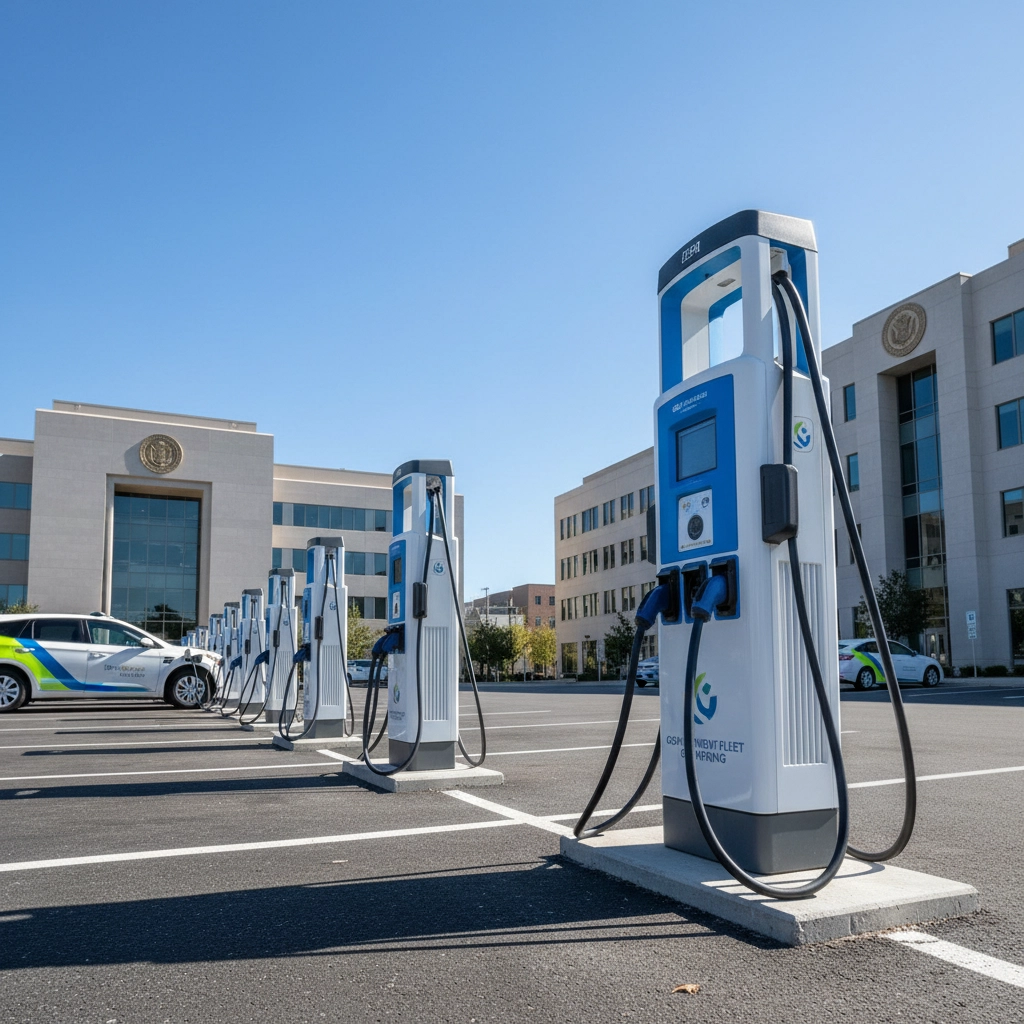
The equity component of NEVI funding sets it apart from traditional infrastructure programs. Federal guidelines direct at least 40% of program benefits toward disadvantaged, low-income, rural, and tribal communities. This requirement ensures your agency contributes to broader social and environmental justice objectives while expanding charging access.
Your NEVI-funded installations must meet strict operational standards. Stations require 97% uptime reliability, 24/7 customer support, and compatibility with all EV manufacturers. These requirements guarantee high-quality user experiences but also establish ongoing compliance obligations for your agency.
Exploring Solar Carport Solutions
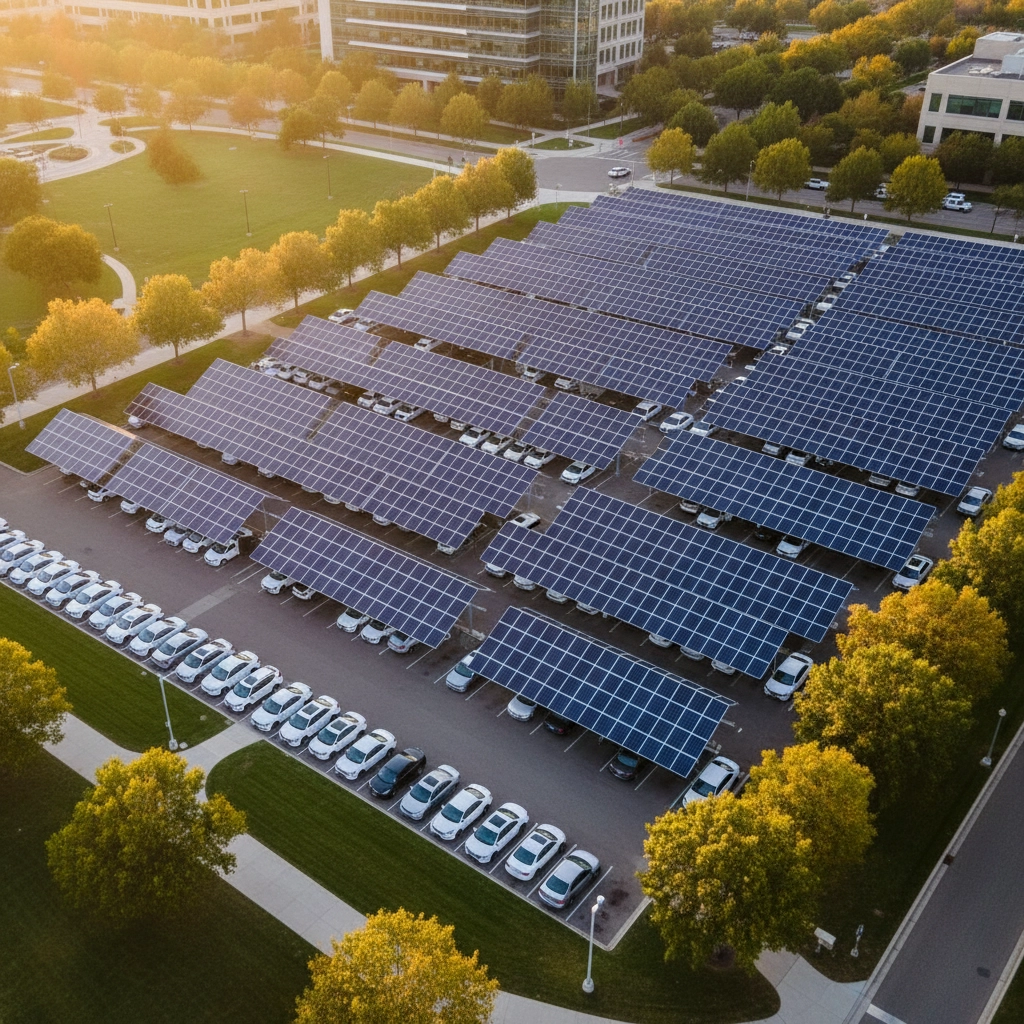
Solar carports deliver a comprehensive infrastructure solution that simultaneously addresses parking, energy generation, and sustainability goals. These installations maximize your existing space by transforming parking areas into renewable energy production facilities while maintaining their primary function.
The financial benefits of solar carports extend beyond simple energy generation. You reduce electricity costs significantly while creating potential revenue streams through energy sales and integrated EV charging services. These installations typically generate positive returns within 7-10 years, with operational lifespans exceeding 25 years.
Vehicle protection represents an often-overlooked advantage of solar carports. Your fleet and visitor vehicles receive protection from weather elements, improving fuel economy through reduced cooling needs and extending vehicle lifespans through reduced UV exposure. This protection translates to measurable operational savings over time.
Solar carports provide exceptional visibility for your sustainability initiatives. These installations serve as highly visible demonstrations of environmental commitment, enhancing your agency's reputation and potentially attracting positive media attention and community support.
Comparing Financial Implications
NEVI funding dramatically reduces upfront capital requirements, making it accessible for agencies with limited infrastructure budgets. Your 20% cost share typically ranges from $50,000 to $100,000 per installation, compared to full solar carport investments that can exceed $500,000 for comparable-sized projects.
Solar carports require substantial upfront investment but offer superior long-term financial returns. You benefit from immediate electricity cost reductions, potential revenue from energy sales, and federal tax incentives for renewable energy installations. Over their operational lifetime, solar carports typically generate savings that significantly exceed their initial cost.
Revenue generation opportunities differ substantially between options. NEVI-funded stations generate income primarily through charging fees, while solar carports create multiple revenue streams including electricity generation, charging services, and potential carbon credit sales.
The financial risk profiles also vary considerably. NEVI funding provides predictable costs with federal oversight, while solar carports carry weather-dependent performance risks but offer greater revenue diversification opportunities.
Evaluating Implementation Requirements
NEVI funding streamlines the implementation process through established federal procedures and technical standards. Your project benefits from federal oversight and support, potentially accelerating approval and construction timelines. However, you must comply with strict location requirements that limit installation flexibility.
Solar carport implementation requires more complex project coordination. You must integrate solar panel installation, parking infrastructure modifications, electrical system upgrades, and potentially EV charging equipment. This complexity extends development timelines but provides greater customization opportunities.

Location flexibility represents a crucial difference between options. NEVI funding restricts installations to designated corridors and proximity requirements, while solar carports can be installed wherever your agency has suitable parking areas with adequate solar exposure.
Maintenance responsibilities differ significantly. NEVI installations benefit from federal standards and potential shared maintenance programs, while solar carports require your agency to manage all operational and maintenance aspects independently.
Making the Strategic Choice
Choose NEVI funding when your primary objective is expanding EV charging access with minimal upfront investment. This option works best if your facilities are located along designated Alternative Fuel Corridors and your agency prioritizes quick implementation over long-term financial returns.
Select solar carports when your agency has substantial parking areas with good solar exposure and can manage higher upfront investments for greater long-term benefits. This choice maximizes sustainability impact while providing energy cost savings and revenue generation opportunities.
Consider your agency's operational priorities carefully. NEVI funding supports transportation electrification goals specifically, while solar carports address broader energy and sustainability objectives while potentially including EV charging capabilities.
Implementation Strategy Recommendations
Develop a comprehensive assessment of your agency's facilities, budget constraints, and sustainability goals before making your decision. Map your existing parking areas against solar exposure data and evaluate proximity to designated Alternative Fuel Corridors.
Engage stakeholders early in your decision-making process. Include facilities management, sustainability coordinators, fleet managers, and financial officers in planning discussions to ensure comprehensive evaluation of both options.
Consider a hybrid approach if your agency operates multiple facilities. You might pursue NEVI funding for corridor-adjacent locations while developing solar carports at facilities with excellent solar resources and substantial parking areas.
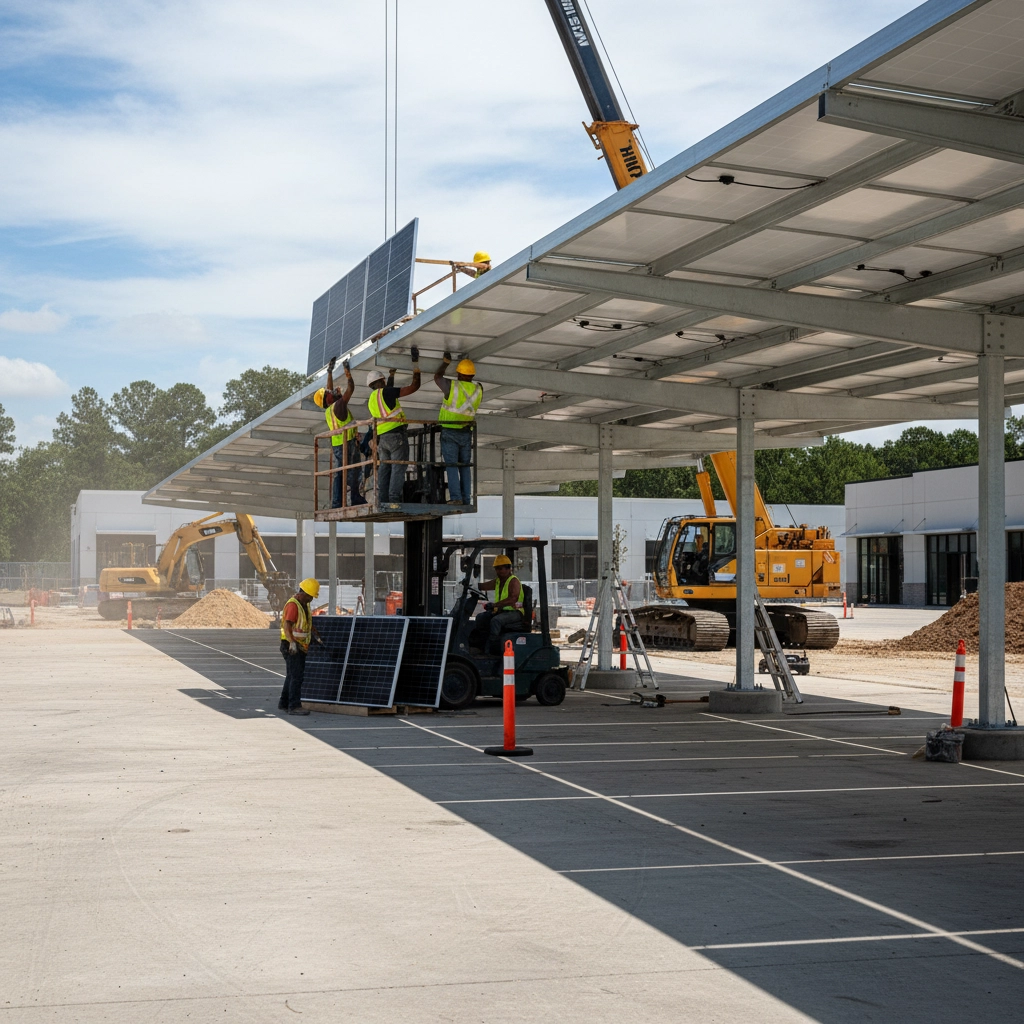
Plan for long-term operational requirements regardless of your choice. Establish maintenance budgets, staff training programs, and performance monitoring systems to ensure successful implementation and ongoing operation.
Both NEVI funding and solar carports offer valuable opportunities for government agencies committed to modernizing their infrastructure and meeting sustainability goals. Your choice should align with your agency's financial capacity, operational requirements, and long-term strategic objectives. NEVI funding provides immediate access to EV charging infrastructure with minimal upfront costs, while solar carports deliver comprehensive sustainability benefits with superior long-term financial returns.
The decision ultimately depends on whether your priority is rapid EV infrastructure deployment or comprehensive energy and sustainability transformation. Evaluate your specific circumstances carefully, and remember that both options contribute significantly to America's clean energy and transportation future.

