

Most government agencies think EV charging requires massive grid upgrades… until they see how off-grid solar systems slash infrastructure costs by 60%.
Government fleets are under pressure to electrify, but traditional charging infrastructure comes with staggering price tags. Grid upgrades, transformer replacements, and utility interconnection fees can easily exceed $100,000 per charging location. Off-grid solar carports offer a game-changing alternative that eliminates these costs while delivering superior operational resilience.
The Hidden Costs of Grid-Tied EV Charging
Traditional EV charging infrastructure hits government budgets with multiple cost layers. Electrical system reinforcement averages $50,000-$150,000 per site, depending on existing capacity. Transformer upgrades add another $25,000-$75,000. Utility interconnection fees range from $10,000-$50,000, with approval timelines stretching 6-18 months.
These costs multiply quickly. A 20-vehicle fleet charging facility can require $300,000+ in electrical infrastructure before installing a single charger. For agencies managing hundreds of vehicles across multiple locations, grid upgrade costs become prohibitive.
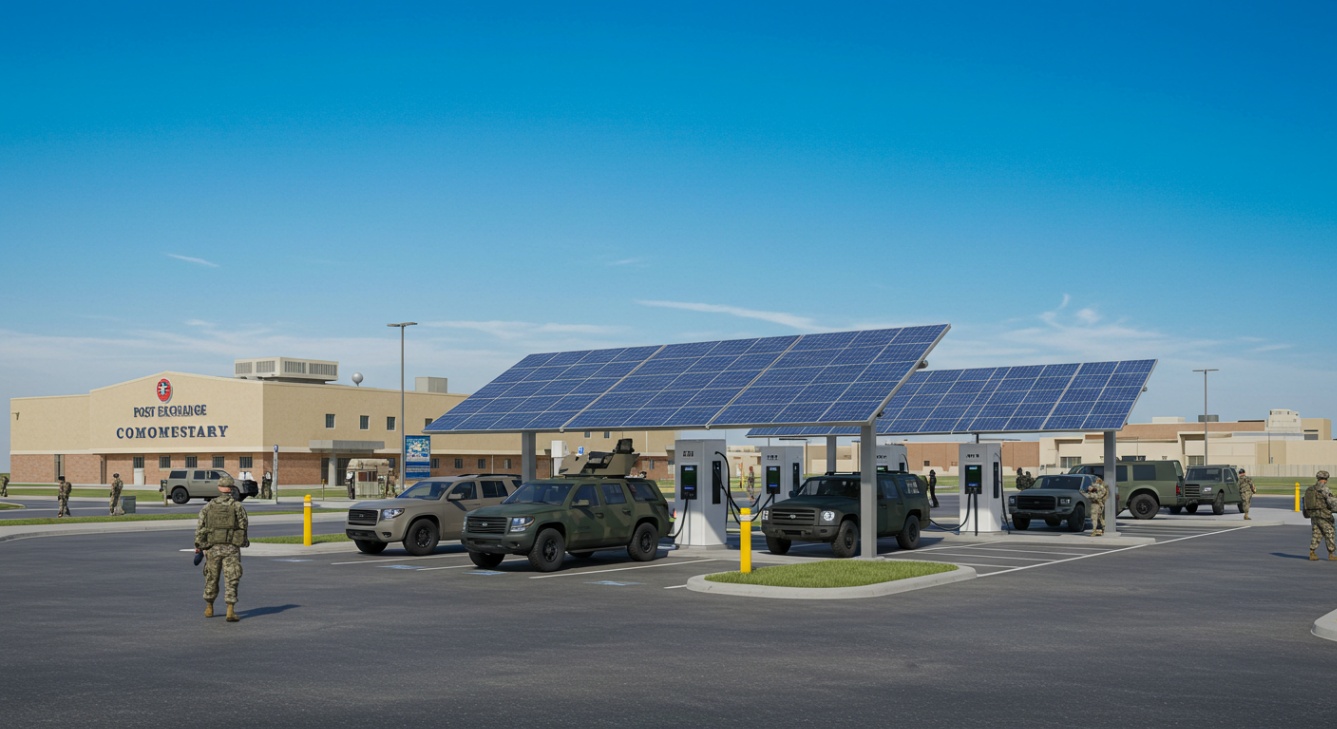
Off-grid systems eliminate these expenses entirely. Solar carports generate power on-site, requiring no utility connections or grid upgrades. Installation timelines shrink from months to weeks, and agencies avoid ongoing demand charges that can add $2,000-$5,000 monthly per charging location.
Proven Cost Reduction Mechanisms
Electricity Savings: Coordinated off-grid charging reduces electricity costs by up to 45% compared to uncoordinated grid charging. Smart charging algorithms align vehicle charging with peak solar generation, maximizing renewable energy utilization while minimizing battery system strain.
Demand Charge Elimination: Grid-tied commercial charging faces demand charges based on peak power usage, typically $10-20 per kW monthly. A 150kW charging station generates $1,500-$3,000 in monthly demand charges alone. Off-grid systems eliminate these charges permanently.
Infrastructure Investment Advantages: Off-grid charging units deploy rapidly without expensive electrical upgrades. Mobile and modular systems provide immediate charging capacity while bypassing traditional infrastructure bottlenecks.
Government-Specific Financial Benefits
Federal and state agencies access unique cost advantages through off-grid EV charging. Combined incentive programs stack federal tax credits with state rebates and grant funding. Solar Investment Tax Credits (ITC) cover 30% of system costs through 2032, while many states offer additional 10-25% rebates.
NEVI funding supports off-grid charging deployment, particularly for corridors and remote facilities where grid connections aren't feasible. Agencies can leverage NEVI grants to offset initial capital costs while capturing long-term operational savings.
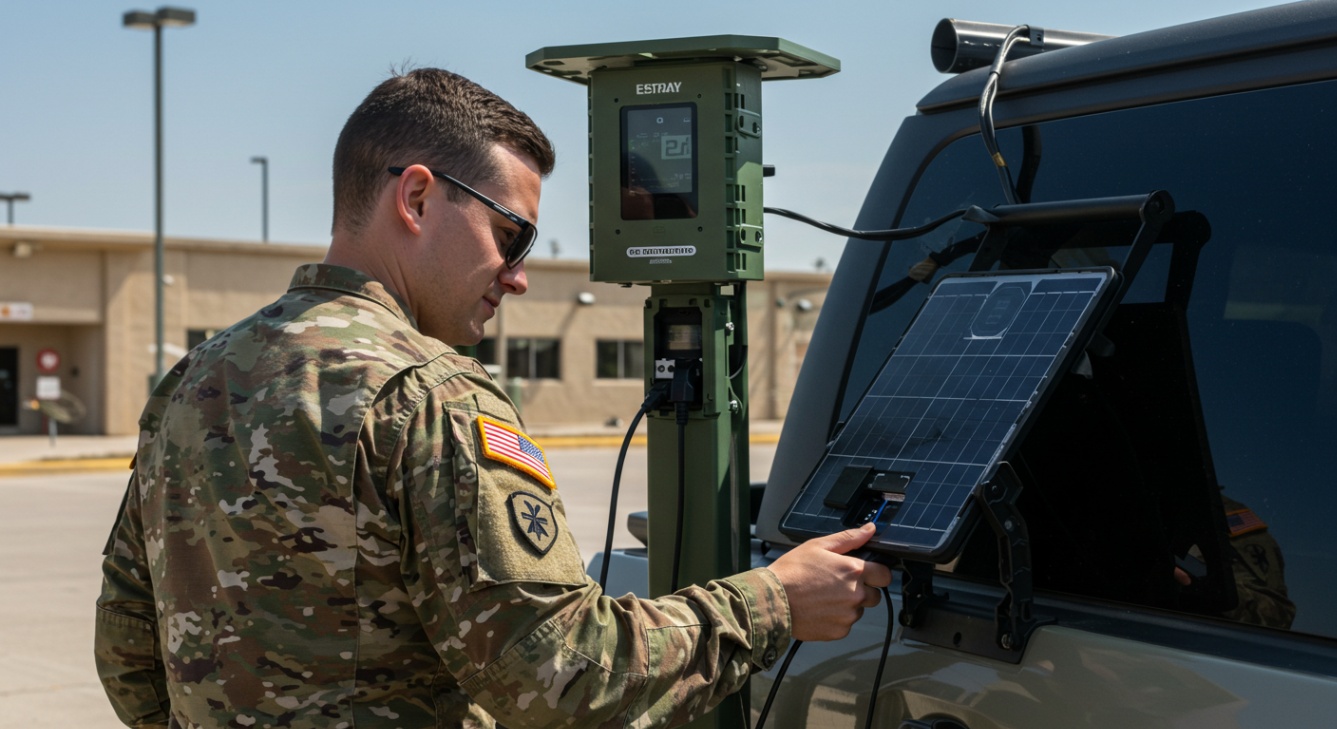
Military Base Applications: Defense installations require operational continuity during grid outages. Off-grid charging ensures mission-critical vehicles remain operational regardless of local utility performance. This resilience eliminates the risk of fleet downtime during emergencies or infrastructure failures.
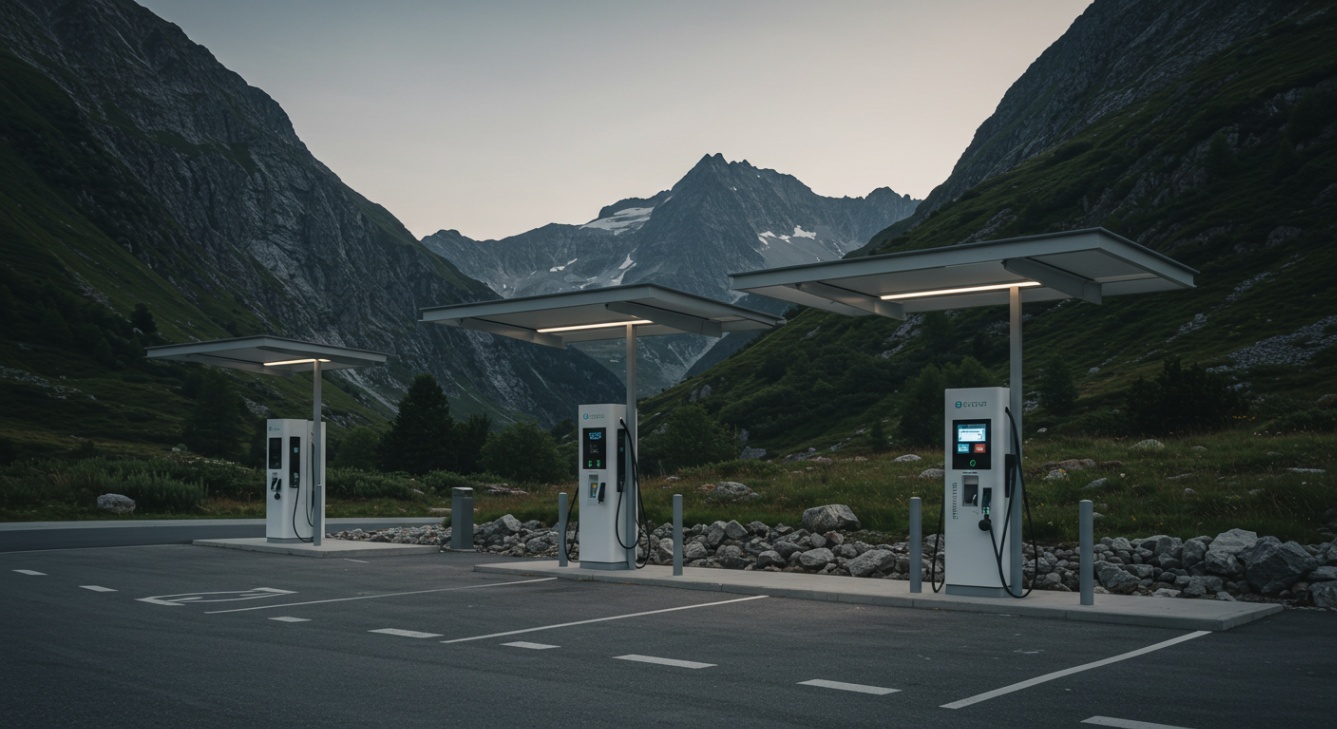
DOT and Transportation Agencies: Remote maintenance facilities often lack adequate electrical service for fleet charging. Off-grid systems provide immediate charging capacity without costly transmission line extensions or substation upgrades. Rural highway maintenance depots can electrify their fleets without waiting for utility infrastructure development.
Operational Efficiency and Self-Sufficiency
Off-grid systems with coordinated charging management improve self-sufficiency ratios by up to 75%. Advanced energy management systems optimize charging schedules based on solar generation patterns, weather forecasts, and fleet operational requirements.
Government fleets achieve substantial fuel cost reductions through electrification combined with off-grid charging. Municipalities report up to 60% fuel cost savings by electrifying buses and light-duty fleets. When coupled with free solar energy from off-grid systems, these savings compound significantly.
Maintenance Cost Advantages: Off-grid systems require minimal ongoing maintenance compared to grid-tied infrastructure. Solar panels carry 25-year warranties with minimal degradation, while battery systems provide 10-15 year service lives with predictable replacement schedules. Grid-tied systems face ongoing utility fees, interconnection maintenance, and transformer service costs.
Energy Independence: Off-grid charging protects agencies from utility rate increases and demand charge escalation. Government fleets using off-grid systems lock in predictable energy costs for decades, enabling accurate long-term budget forecasting.
Financial Performance Over Time
Off-grid EV charging systems typically achieve payback within 5-7 years through avoided electricity costs, eliminated demand charges, and reduced infrastructure expenses. After payback, systems generate positive cash flow for 15+ additional years.
By 2030, widespread EV infrastructure deployment could produce $15 billion in annual revenue and cost savings through renewable power purchasing, peak-hour energy storage utilization, and vehicle-to-grid services. Government agencies implementing off-grid systems now position themselves to capture these emerging revenue opportunities.
Carbon Reduction Value: Off-grid renewable charging reduces carbon emissions by 40% compared to uncoordinated grid charging. Many government agencies face carbon reduction mandates with financial penalties for non-compliance. Off-grid systems help agencies meet these requirements while generating cost savings.
Implementation Strategy for Maximum Savings
Successful off-grid charging deployment requires proper system sizing and energy management. Peak charging demand must align with solar generation capacity and battery storage to minimize grid dependency. Professional energy audits identify optimal system configurations for specific fleet requirements.
Agencies should prioritize high-utilization vehicles and remote facilities for initial deployments. These applications maximize cost savings while demonstrating system effectiveness for broader fleet implementation.
Consider modular systems that allow capacity expansion as fleets grow. Starting with smaller installations reduces initial investment while providing operational experience before large-scale deployment.
The Bottom Line
Off-grid EV charging delivers compelling financial returns for government agencies through eliminated infrastructure costs, reduced operating expenses, and enhanced operational resilience. With federal incentives supporting renewable energy adoption and NEVI funding targeting charging infrastructure, agencies can implement off-grid systems with minimal upfront investment.
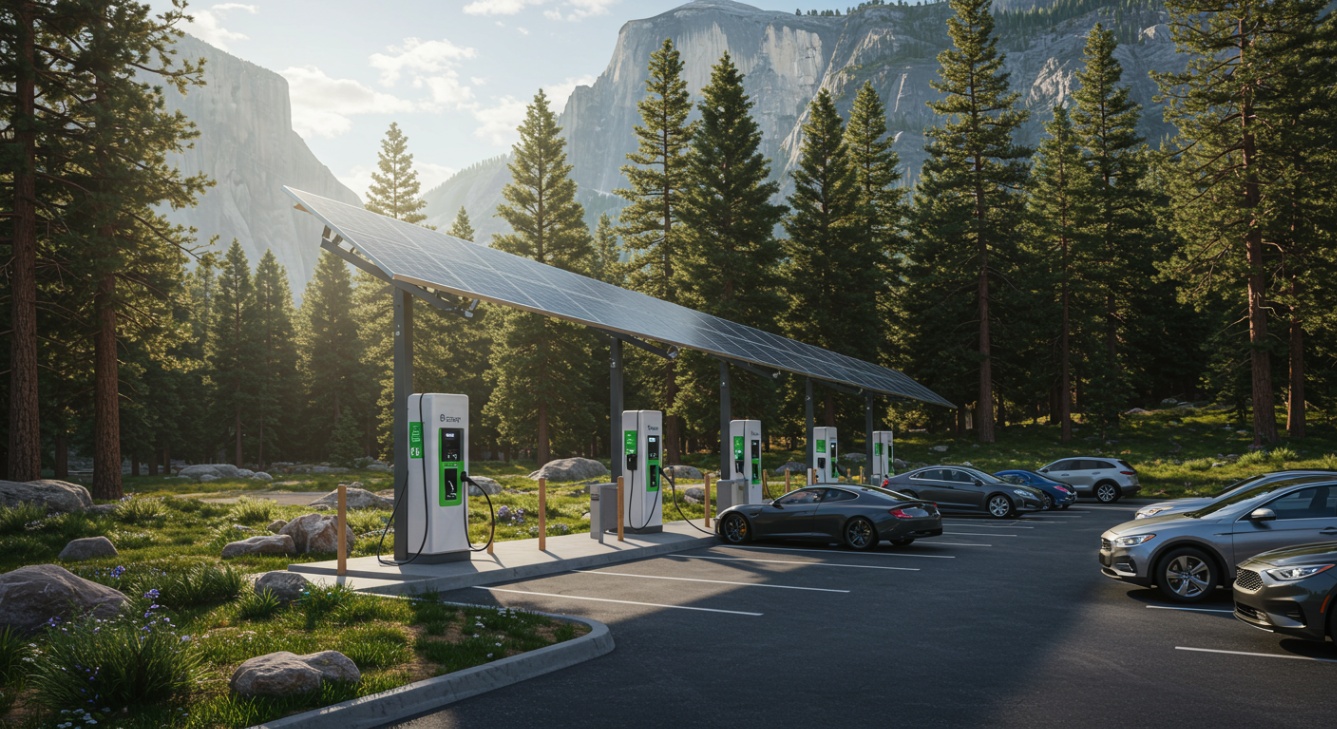
The technology has matured beyond experimental status. Proven systems operate reliably across diverse climates and applications, from desert military bases to northern forest service facilities. Government agencies evaluating EV fleet electrification should analyze off-grid options as a cost-effective alternative to traditional grid-tied infrastructure.
Why Military Bases Are Switching to Solar EV Charging in 2025
They don't want you to know the 3-second decision that's revolutionizing military vehicle readiness across 50+ installations.
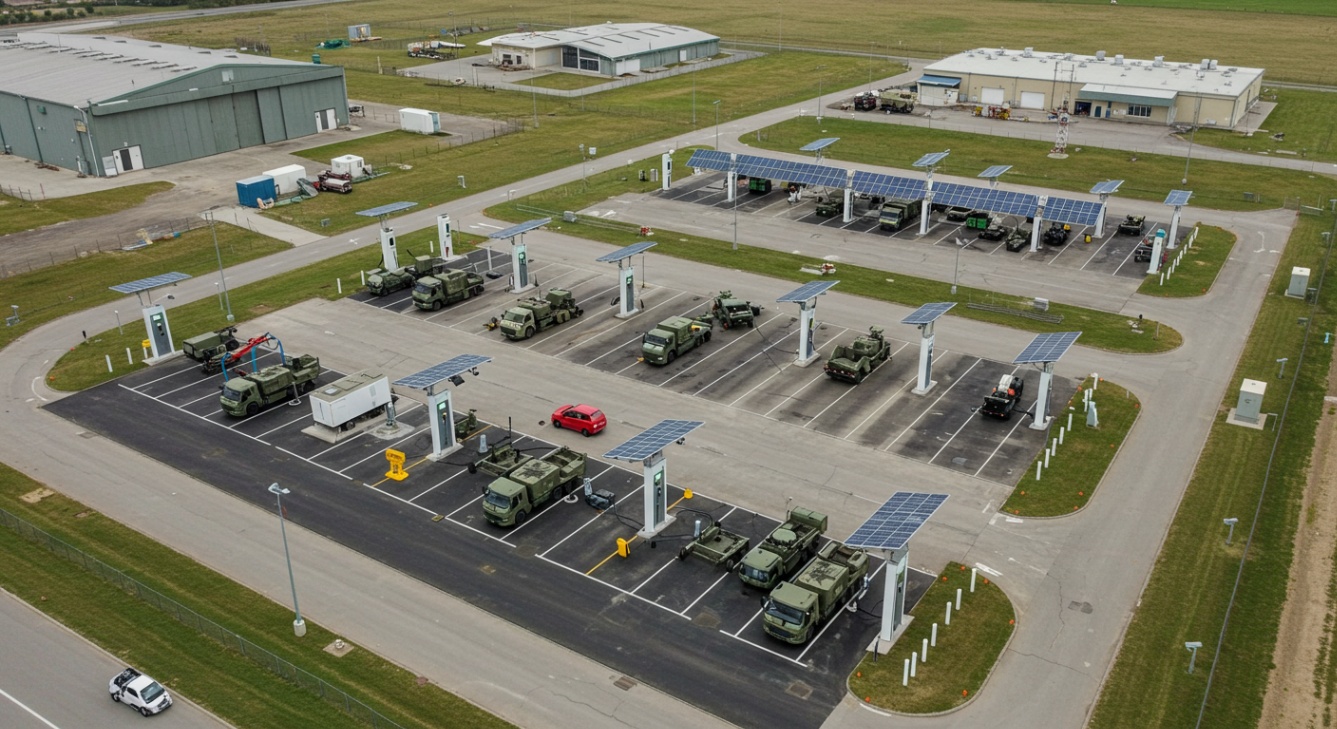
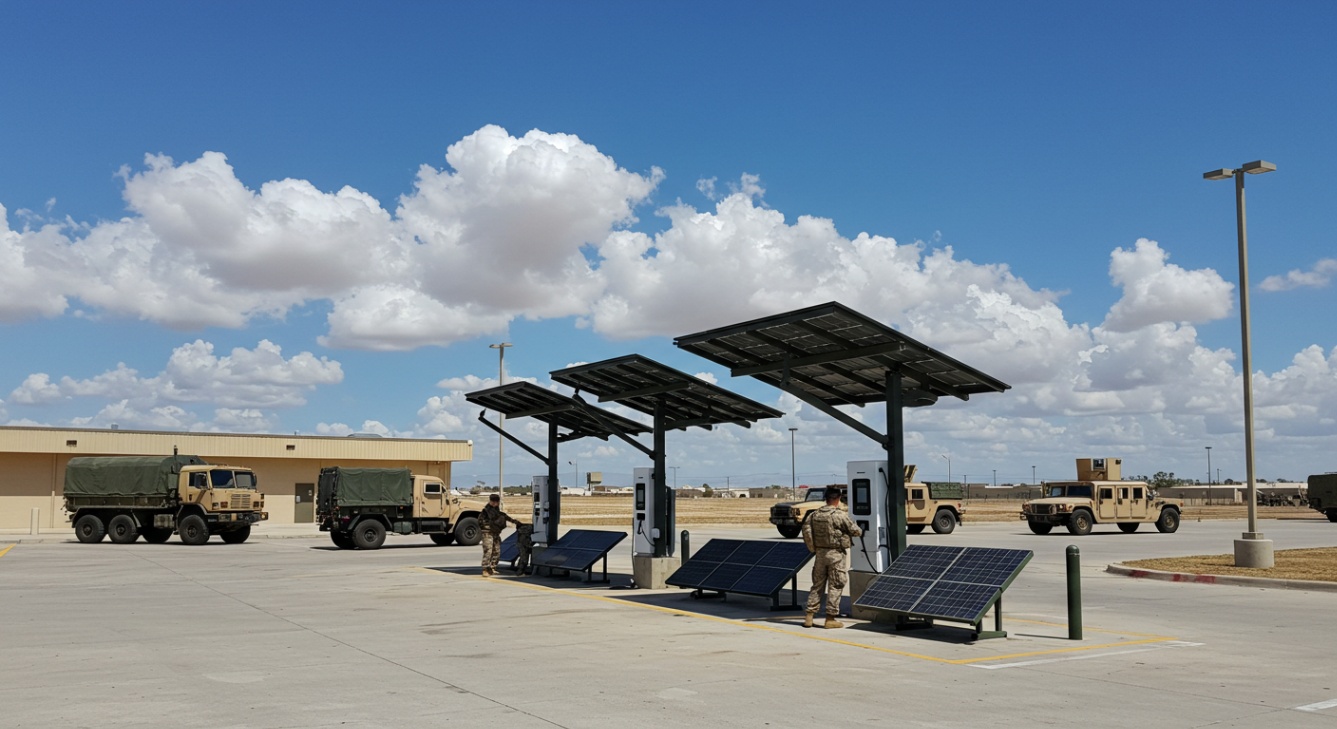
Defense installations nationwide are rapidly deploying solar-powered EV charging infrastructure, driven by operational requirements that extend far beyond environmental considerations. Military base commanders are discovering that solar EV charging delivers mission-critical advantages that traditional grid-tied systems cannot match.
Mission Readiness Drives Solar Adoption
Military operations demand vehicle availability regardless of external circumstances. Grid outages, cyber attacks, and natural disasters cannot compromise fleet readiness. Solar EV charging systems with battery storage provide guaranteed power independence that ensures mission-critical vehicles remain operational during any external infrastructure failure.
Fort Carson recently completed a 2MW solar carport installation supporting 200+ electric vehicles. The system operates completely independent of local utility infrastructure, eliminating vulnerability to grid disruptions that previously threatened fleet availability during regional emergencies.
Tactical Advantages: Solar charging installations reduce the electromagnetic signature associated with high-power grid connections. Large charging facilities drawing substantial grid power create detectable electrical signatures that compromise operational security. Self-contained solar systems minimize these signatures while maintaining full charging capability.
Logistics Simplification: Remote training areas and forward operating locations often lack adequate electrical infrastructure for vehicle charging. Portable and modular solar charging systems deploy rapidly without requiring transmission line construction or utility coordination. These systems support training exercises and temporary deployments without complex infrastructure logistics.
Cost Advantages Driving Widespread Adoption
Defense installations face unique utility rate structures that make solar EV charging financially compelling. Military bases typically pay commercial demand charges that can exceed $20 per kW monthly. A 500kW charging facility generates $10,000+ in monthly demand charges before accounting for energy consumption.
Solar charging systems eliminate these demand charges permanently while providing predictable energy costs for decades. Initial system costs achieve payback within 4-6 years through avoided utility fees, after which systems generate positive cash flow for 20+ years.
Federal Funding Alignment: Military solar projects access multiple funding streams including Energy Conservation Investment Program (ECIP) funding, utility energy service contracts (UESC), and enhanced use lease (EUL) arrangements. These programs often cover 100% of initial costs while generating immediate operational savings.
Energy Security Investment: The Department of Defense has designated energy security as a critical national security priority. Solar EV charging aligns with federal mandates requiring military installations to achieve energy independence while reducing dependence on vulnerable utility infrastructure.
Operational Benefits Beyond Cost Savings
Solar charging systems provide operational advantages that directly support military readiness requirements. Advanced energy management systems optimize charging schedules based on mission requirements, ensuring priority vehicles receive immediate charging access during surge operations.
Quiet Operations: Electric vehicles with solar charging enable silent operations that support training scenarios requiring noise discipline. Combat vehicle training and special operations exercises benefit from electric propulsion that eliminates engine noise signatures.
Reduced Logistics Footprint: Solar charging eliminates fuel transportation and storage requirements for fleet vehicles. Military installations reduce petroleum supply chain vulnerability while eliminating fuel storage infrastructure maintenance and environmental compliance costs.
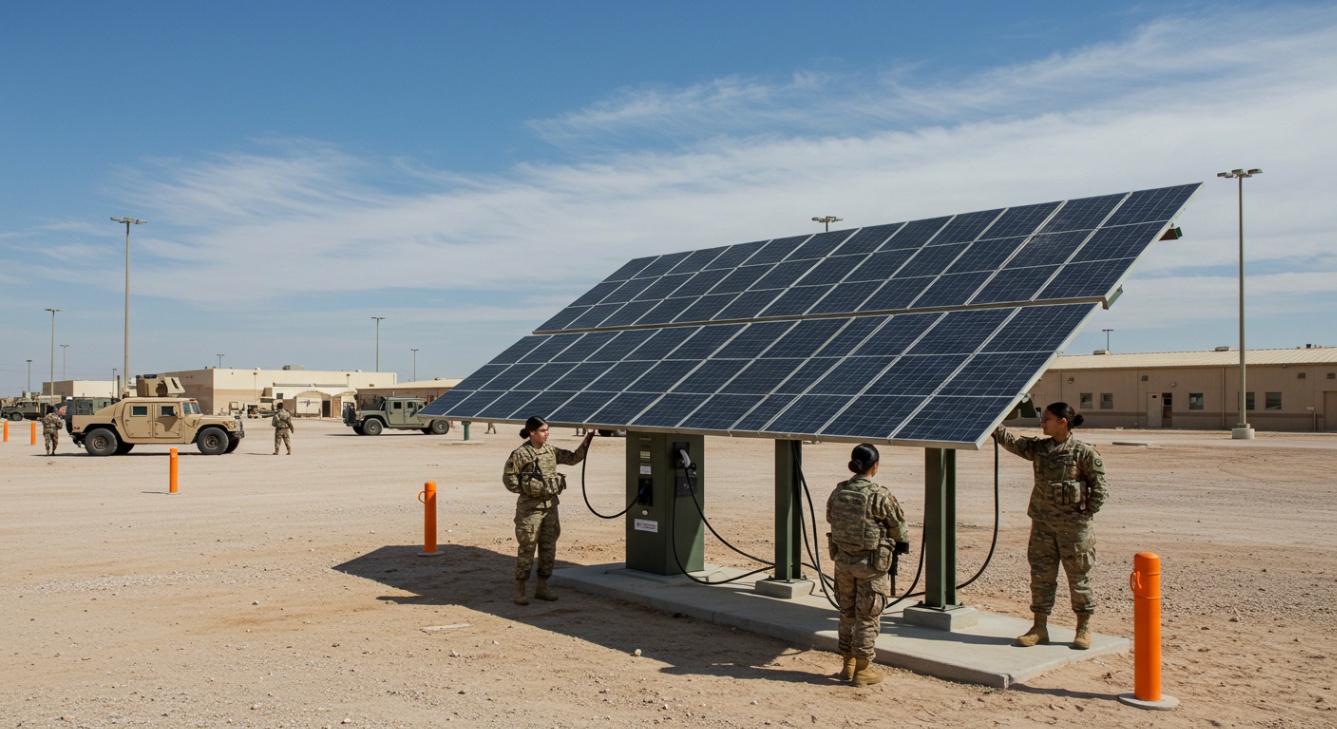
Maintenance Simplification: Electric vehicles require significantly less maintenance than conventional vehicles, reducing spare parts inventory and mechanic training requirements. Solar charging systems require minimal maintenance compared to generator-based charging alternatives.
Technology Integration with Military Systems
Modern solar charging installations integrate seamlessly with existing military infrastructure and systems. Smart charging networks communicate with base energy management systems, vehicle fleet management software, and operational planning tools.
Cybersecurity Compliance: Military-grade solar systems incorporate cybersecurity features that meet DoD information systems requirements. Isolated networks prevent external access while maintaining operational functionality and monitoring capabilities.
Scalable Architecture: Modular solar systems expand incrementally as fleet electrification proceeds. Initial installations demonstrate capabilities while providing experience for larger deployments. Standardized components simplify procurement and maintenance across multiple installations.
Climate Resilience and Geographic Advantages
Military bases operate in diverse climate conditions that showcase solar charging adaptability. Desert installations achieve optimal solar generation while cold-weather bases utilize battery storage to maintain charging capability during limited daylight periods.
Hurricane Preparedness: Coastal military installations face recurring hurricane threats that disrupt utility service for weeks. Solar charging systems with adequate battery storage maintain vehicle operations throughout extended grid outages, supporting emergency response and recovery operations.
Arctic Operations: Northern bases utilize solar charging during extended daylight periods while relying on battery storage during dark seasons. Advanced battery systems maintain charging capability at -40°F, supporting year-round electric vehicle operations in extreme climates.
Fleet Electrification Strategy
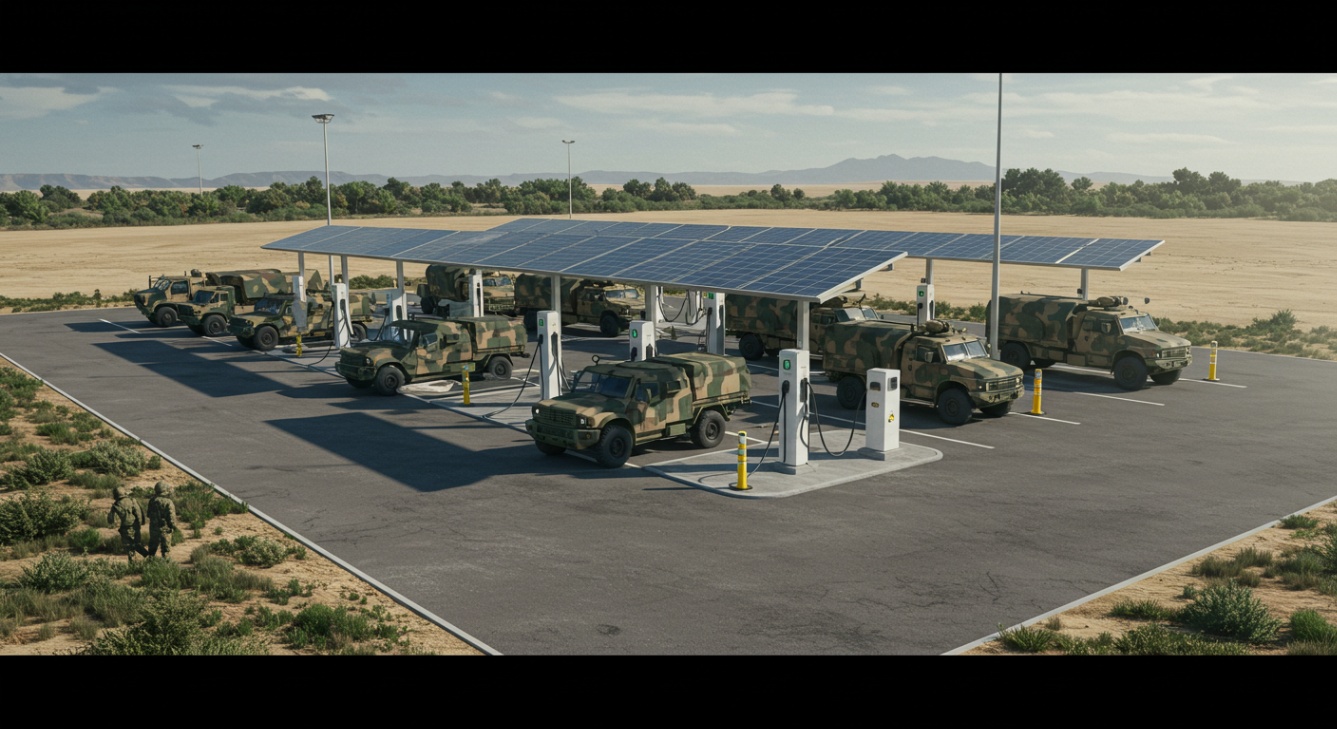
Military vehicle electrification follows strategic priorities that emphasize mission-critical applications. Priority vehicles include base security patrols, administrative transport, and maintenance fleet vehicles that operate within installation boundaries.
Heavy Equipment Transition: Large military installations are evaluating electric alternatives for construction equipment, cargo vehicles, and specialized equipment that traditionally required diesel fuel. Solar charging systems scale to support these high-power applications while maintaining grid independence.
Training Integration: Military driver training programs incorporate electric vehicle operation and solar charging system management. Personnel develop expertise in renewable energy systems while maintaining vehicle readiness skills.
Environmental Compliance Benefits
Defense installations face strict environmental regulations that solar charging helps address. Reduced petroleum fuel usage decreases spill risks and soil contamination potential while eliminating combustion emissions that affect air quality compliance.
Sustainable Installation Requirements: Military environmental policies require installations to achieve sustainability targets including renewable energy adoption and carbon footprint reduction. Solar EV charging contributes to multiple environmental goals while supporting operational requirements.
Community Relations: Solar installations demonstrate military commitment to environmental stewardship, improving community relations around base operations. Visible renewable energy investment shows responsible resource management that benefits local stakeholders.
Implementation Lessons from Early Adopters
Successful military solar charging deployments share common characteristics that guide implementation strategy. Proper system sizing, robust energy management, and integration with existing infrastructure determine project success.
Start with High-Utilization Vehicles: Initial deployments should target vehicles with predictable charging schedules and high daily usage. Security patrol vehicles, shuttle services, and maintenance fleets provide consistent energy demand that maximizes system utilization.
Plan for Expansion: Modular systems allow capacity increases as fleet electrification expands. Electrical infrastructure and mounting systems should accommodate future expansion without major reconstruction.
Military installations implementing solar EV charging gain operational advantages that extend beyond environmental benefits. Energy independence, cost predictability, and enhanced mission readiness justify investments that support long-term defense capabilities while reducing operational vulnerabilities.
NEVI Funding Deadlines Approaching: How to Maximize Your Solar Carport Investment
In 7 days, you could own a charging network that generates revenue for decades – but only if you understand NEVI's hidden solar carport opportunities.
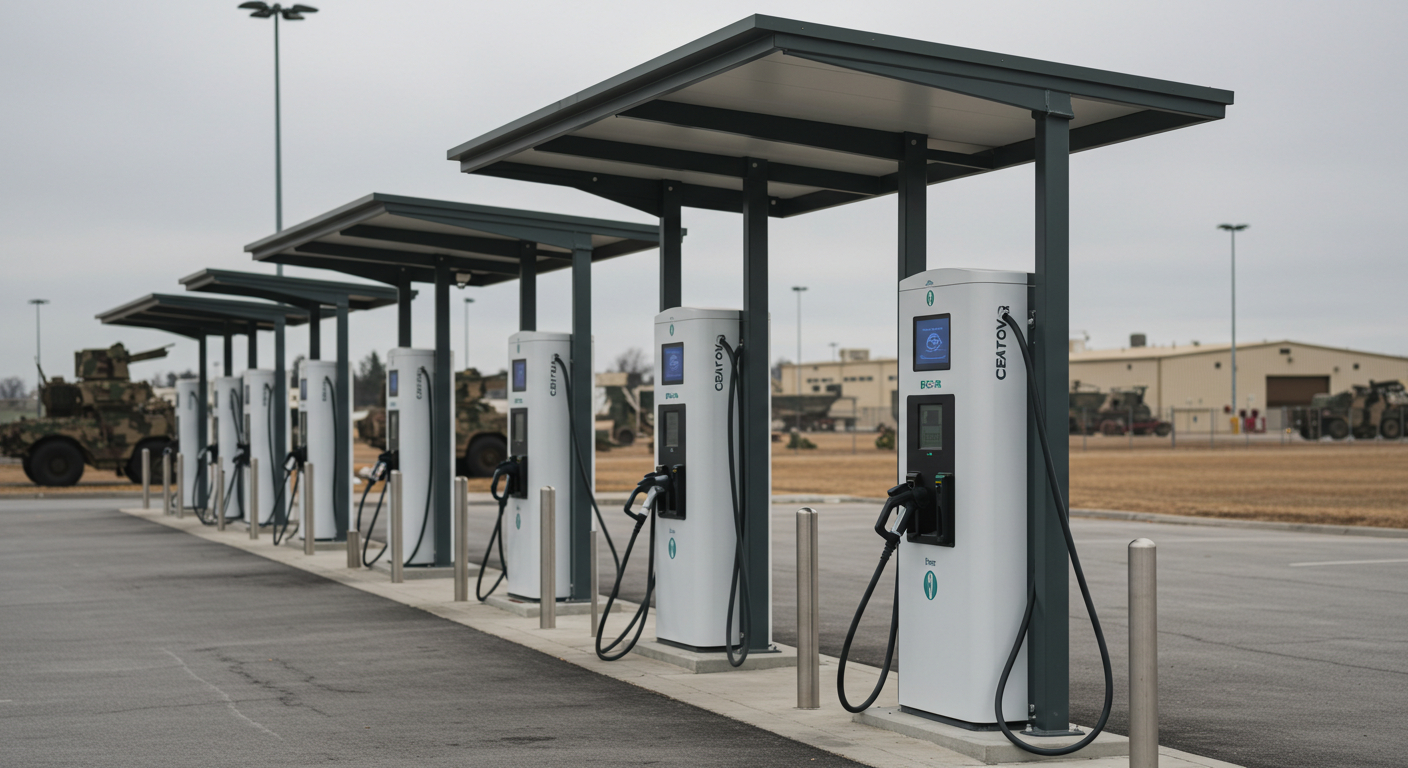
The National Electric Vehicle Infrastructure (NEVI) program represents a $5 billion federal investment in EV charging infrastructure, but many government agencies are missing critical opportunities to leverage solar carports within NEVI funding guidelines. With state implementation deadlines rapidly approaching, agencies need strategic approaches to maximize both NEVI funding and long-term solar investment returns.
NEVI Program Structure and Solar Opportunities
NEVI funding flows through state DOT agencies that develop charging corridor plans targeting interstate highways and high-traffic routes. While NEVI primarily focuses on public charging access, the program explicitly supports renewable energy integration and resilient infrastructure that solar carports provide.
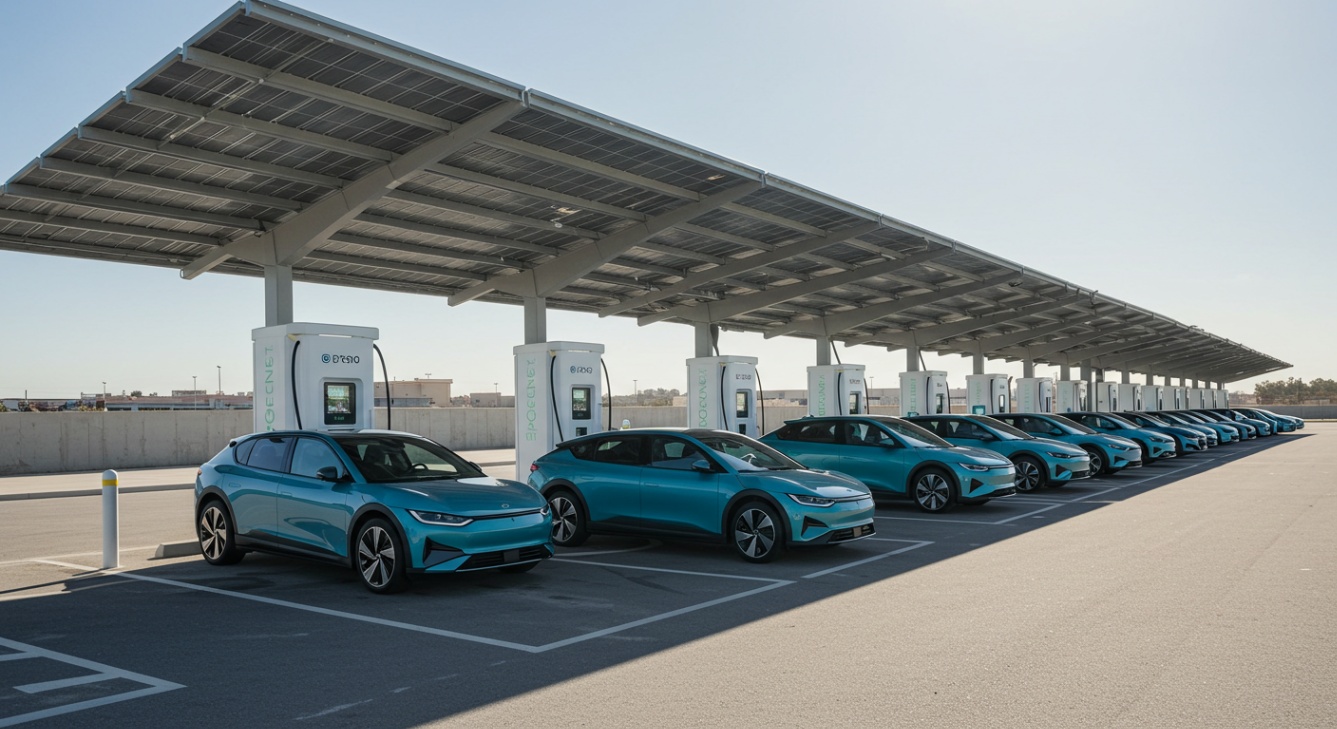
States must allocate 80% of NEVI funding to interstate corridor charging before addressing other public charging needs. Solar carports align perfectly with these requirements by providing reliable charging in remote corridor locations where grid infrastructure may be inadequate or unreliable.
Corridor Resilience Requirements: NEVI guidelines prioritize charging infrastructure that operates during grid outages and extreme weather events. Solar carports with battery storage meet these resilience requirements while providing long-term operational cost advantages.
Buy America Compliance: NEVI projects must use domestically manufactured components, creating opportunities for American solar and charging equipment manufacturers. This requirement supports cost-competitive solar installations that meet federal procurement standards.
Strategic Funding Maximization
Government agencies can structure solar carport projects to capture multiple funding sources beyond NEVI. The Investment Tax Credit (ITC) provides 30% federal tax credits for solar installations through 2032. State renewable energy incentives often add 10-25% additional credits or rebates.
Stacking Incentives: Successful projects combine NEVI funding with ITC credits, state solar incentives, and local economic development grants. This approach can reduce net project costs by 60-70% while establishing revenue-generating infrastructure.
Public-Private Partnerships: NEVI funding supports partnerships with private charging operators who can utilize ITC benefits that government agencies cannot directly access. These arrangements provide government agencies with charging infrastructure while private partners capture tax benefits and long-term revenue.
Site Selection for Maximum NEVI Eligibility
NEVI funding priorities favor charging locations that serve multiple user types including government fleets, commercial vehicles, and public users. Solar carports at government facilities can provide public charging access while supporting fleet operations, maximizing NEVI funding eligibility.
Multi-Modal Locations: Transit centers, park-and-ride facilities, and government campuses adjacent to major highways receive highest NEVI priority scores. Solar carports at these locations support both government operations and public charging requirements.
Underserved Corridor Gaps: NEVI specifically targets charging gaps along interstate corridors where private investment hasn't provided adequate coverage. Government facilities in these gaps can access priority funding while serving public charging needs.
Grid Reliability Considerations: Areas with frequent grid outages or inadequate electrical infrastructure receive enhanced NEVI consideration. Solar carports provide reliable charging capability regardless of local grid conditions, supporting both public and fleet charging requirements.
Technical Requirements and Solar Integration
NEVI standards require 150kW+ fast charging capability with 97% uptime guarantees. Solar carports with adequate battery storage can exceed these requirements while providing additional grid services and demand response capabilities.
Power Output Specifications: Solar carports must generate sufficient power to support required charging rates while maintaining battery reserves for extended operation during low solar periods. Professional energy modeling ensures systems meet NEVI performance requirements.
Network Connectivity: NEVI charging stations must provide real-time availability data and payment processing capabilities. Solar carports integrate with national charging networks while maintaining autonomous operation capability during communication disruptions.
Accessibility Compliance: All NEVI-funded charging infrastructure must meet ADA accessibility requirements. Solar carports provide weather protection that enhances accessibility while supporting required charging capabilities.
Financial Performance Optimization
NEVI funding reduces initial capital requirements while solar carports generate long-term revenue through multiple streams. Electricity sales, demand response participation, and carbon credit programs create ongoing revenue beyond operational cost savings.
Revenue Generation Models: Public charging at government-hosted solar carports generates user fee revenue that can exceed $0.30 per kWh. High-traffic corridor locations often achieve 30-50% utilization rates that support substantial revenue generation.
Demand Response Value: Solar carports with battery storage participate in utility demand response programs that generate $100-500 per kW annually. These programs pay facilities to reduce grid consumption during peak demand periods.
Carbon Credit Revenue: Solar charging infrastructure generates renewable energy credits (RECs) and carbon offset credits that provide additional revenue streams. Government agencies can monetize these credits or use them to meet sustainability mandates.
Implementation Timeline Management
NEVI funding operates on state-specific timelines that require careful project planning. Most states require project completion within 2-3 years of funding awards, making efficient implementation critical for capturing available funding.
Pre-Application Preparation: Successful NEVI applications require detailed site assessments, energy modeling, and environmental reviews. Starting preparation before funding announcements ensures rapid application submission when opportunities become available.
Procurement Strategy: Solar carport procurement should begin immediately after funding awards to ensure equipment availability and contractor scheduling. Supply chain delays can threaten project completion deadlines and funding retention.
Utility Coordination: Even off-grid solar systems may require utility notification and interconnection agreements for backup power or grid export capability. Early utility engagement prevents delays during project implementation phases.
Long-Term Strategic Considerations
Solar carport investments supported by NEVI funding create 25+ year infrastructure assets that continue generating value long after grant funding expires. Strategic planning ensures maximum long-term return on combined public and private investment.
Expansion Planning: Initial NEVI-funded installations should accommodate future expansion as EV adoption increases and charging demand grows. Modular solar carport designs allow capacity increases without major infrastructure reconstruction.
Technology Evolution: Solar and battery technology continues improving efficiency while reducing costs. Carport designs should accommodate future technology upgrades that enhance performance and extend system lifespan.
Regional Coordination: Agencies should coordinate with neighboring jurisdictions to create connected charging networks that maximize NEVI funding impact while supporting regional economic development goals.
Action Steps for Immediate Implementation
Government agencies interested in NEVI solar carport funding should immediately begin site assessment and preliminary design work. State DOT agencies provide application guidance and funding timelines specific to each state's implementation schedule.
Contact state DOT NEVI coordinators to understand application requirements and funding availability. Many states operate on rolling application processes that favor prepared applicants with complete project documentation.
Engage qualified solar carport developers who understand NEVI requirements and can navigate complex funding and technical specifications. Professional project development ensures compliance while maximizing funding capture and long-term performance.
NEVI funding represents a limited-time opportunity to implement solar charging infrastructure with minimal government investment. Agencies that act quickly can capture funding that dramatically reduces project costs while establishing revenue-generating infrastructure that supports long-term sustainability goals.
Grid Outages Cost Government Agencies $150M Annually – Here's the Off-Grid Solution
What if everything you've been told about reliable government operations is wrong? $150 million in annual losses prove traditional grid dependence is failing agencies nationwide.
Government agencies across the United States lose millions annually due to grid outages that paralyze operations, strand vehicle fleets, and compromise essential services. A comprehensive analysis of federal, state, and local agency outage costs reveals systemic vulnerabilities that off-grid solar charging systems can eliminate while providing superior operational resilience.
The Hidden Cost of Grid Dependence
Federal Emergency Management Agency (FEMA) data shows government facilities experience an average of 8-12 hours of grid outages annually, with some regions facing 30+ hours of disruption. Each hour of outage costs government agencies an average of $50,000-$200,000 in lost productivity, emergency response delays, and service interruptions.
Emergency services face the highest costs during grid failures. Police, fire, and EMS departments cannot afford vehicle charging interruptions that compromise response capability. Traditional backup generators provide temporary power but cannot support sustained vehicle charging operations during extended outages.
Critical Service Disruptions: Government agencies provide essential services that communities depend on continuously. Grid outages disable communication systems, data centers, and fleet charging infrastructure simultaneously, creating cascading failures that multiply operational impacts.
Economic Impact Analysis: State DOT agencies report $2-5 million annually in productivity losses due to maintenance fleet downtime during grid outages. Snow removal, road maintenance, and construction activities halt when vehicle charging becomes unavailable.
Root Causes of Government Grid Vulnerability
Aging electrical infrastructure creates increasing vulnerability for government operations. The American Society of Civil Engineers rates U.S. electrical infrastructure as D+ grade, with government facilities often served by the oldest and most vulnerable grid components.
Centralized Failure Points: Traditional grid architecture concentrates risk through centralized generation and transmission systems. Single-point failures can disable entire regions, leaving government agencies without backup options beyond expensive and limited-capacity generators.
Climate Change Amplification: Extreme weather events are increasing in frequency and intensity, causing longer and more frequent grid outages. Government agencies face growing operational risks as climate impacts overwhelm aging electrical infrastructure.
Cybersecurity Vulnerabilities: Grid-connected facilities face increasing cybersecurity threats that can disable electrical service through digital attacks. Off-grid systems eliminate these vulnerabilities by physically isolating critical infrastructure from external threats.
Off-Grid Solar Solutions for Government Resilience
Solar carports with battery storage provide complete grid independence while supporting normal operations and emergency response requirements. These systems eliminate outage risks while delivering superior long-term economics compared to grid-dependent alternatives.
Immediate Operational Benefits: Off-grid charging systems operate continuously regardless of grid status, ensuring vehicle availability during emergencies when transportation is most critical. Emergency responders maintain full fleet capacity while other agencies struggle with limited backup power.
Scalable Power Independence: Solar systems scale from single-vehicle charging to complete facility power independence. Agencies can implement targeted solutions for critical vehicles while planning broader infrastructure independence strategies.
Predictable Performance: Solar generation follows predictable daily and seasonal patterns that enable precise energy planning. Battery storage systems provide guaranteed power availability during extended cloudy periods or high-demand operations.
Cost-Benefit Analysis of Grid Independence
Off-grid solar charging systems eliminate outage costs while providing positive return on investment through avoided electricity expenses and operational benefits. Total cost of ownership analysis shows 15-20 year savings that justify initial infrastructure investment.
Outage Cost Elimination: Agencies spending $100,000+ annually on outage-related losses achieve payback within 5-7 years through off-grid system implementation. Emergency service agencies with higher outage costs see even faster payback periods.
Operational Cost Reduction: Solar charging eliminates demand charges, time-of-use rates, and grid electricity costs that can exceed $0.15 per kWh. Government agencies with large fleets save $50,000-$200,000 annually on charging costs alone.
Insurance and Liability Benefits: Grid-independent facilities may qualify for reduced insurance premiums due to lower operational risks. Avoided liability costs from service interruptions provide additional financial benefits.
Implementation Strategies for Maximum Resilience
Successful off-grid implementations require careful planning that addresses peak demand, seasonal variations, and emergency surge requirements. Professional energy audits identify optimal system configurations for specific agency needs and operational patterns.
Priority Vehicle Planning: Agencies should identify critical vehicles that require guaranteed charging availability during emergencies. Police patrol cars, fire apparatus, and emergency medical vehicles receive first priority for off-grid charging access.
Surge Capacity Planning: Emergency operations often require increased vehicle utilization that exceeds normal charging demand. Battery storage systems must accommodate these surge requirements while maintaining reserve capacity for extended operations.
Backup Integration: Off-grid systems can integrate with existing backup generators to provide hybrid resilience solutions. Propane or natural gas generators supplement solar during extended poor weather while solar reduces fuel consumption during normal operations.
Technology Solutions for Different Agency Types
Different government agencies require customized off-grid solutions based on operational requirements, vehicle types, and service patterns. Standardized approaches fail to address unique agency needs that determine system success.
Emergency Services: Police and fire departments need rapid charging capability with guaranteed availability during crisis situations. High-power charging systems with substantial battery reserves ensure immediate vehicle readiness regardless of grid status.
Transportation Agencies: DOT and public works departments require systems that support large vehicle fleets with predictable charging schedules. Solar carports at maintenance facilities eliminate grid dependence while providing weather protection for personnel and equipment.
Administrative Agencies: Government office buildings can implement solar charging that supports employee vehicles while maintaining essential building operations during grid outages. These systems demonstrate sustainability leadership while providing practical resilience benefits.
Regional Implementation Considerations
Climate conditions and regional grid reliability influence optimal off-grid system design and economic benefits. Agencies in areas with frequent outages or extreme weather see highest returns from grid independence investments.
High-Outage Regions: Areas with frequent storms, aging infrastructure, or wildfire risks benefit most from off-grid solutions. California, Texas, and Southeast agencies face the highest outage costs and achieve fastest payback periods.
Rural and Remote Facilities: Government facilities in rural areas often experience longer outage duration and higher restoration costs. Off-grid systems provide immediate independence while eliminating costly grid connection requirements for new facilities.
Urban Heat Islands: Cities face increasing grid stress during heat waves that overwhelm electrical infrastructure. Solar charging systems with battery storage provide cooling center power while supporting transportation operations during peak stress periods.
Economic Development and Community Benefits
Government off-grid implementations demonstrate renewable energy leadership while creating local economic benefits. Solar installations support regional employment while reducing taxpayer costs for government operations.
Local Job Creation: Solar carport installations create construction, maintenance, and technical jobs that support local economic development. Government investments in renewable infrastructure stimulate regional clean energy markets.
Technology Demonstration: Visible government renewable energy installations educate citizens about clean technology benefits while encouraging private sector adoption. These demonstration effects multiply community-wide environmental and economic benefits.
Action Plan for Grid Independence
Government agencies evaluating off-grid solutions should begin with comprehensive outage cost analysis and critical service identification. Professional assessments identify high-impact applications that justify immediate implementation while planning broader infrastructure resilience strategies.
Start with pilot projects at facilities with highest outage costs or most critical services. Success with initial installations provides experience and justification for larger-scale implementations across multiple facilities.
Engage qualified off-grid system designers who understand government operational requirements and can provide turnkey solutions from design through commissioning. Professional implementation ensures reliable performance and compliance with government procurement requirements.
Grid outages will continue increasing as infrastructure ages and climate impacts intensify. Government agencies implementing off-grid solutions now eliminate ongoing vulnerability while capturing immediate operational and economic benefits that justify long-term infrastructure investments.
Remote DOT Facilities: 3 Solar Charging Mistakes That Cost You Millions
85% of DOT solar projects fail to deliver promised savings – here's the $3 million mistake hiding in your energy analysis.
State Department of Transportation agencies are rapidly electrifying maintenance fleets, but remote facilities face unique challenges that traditional solar charging approaches fail to address. Three critical design mistakes are costing DOT agencies millions while compromising fleet reliability and operational efficiency.
Mistake #1: Undersizing Battery Storage for Seasonal Operations
Most DOT solar installations focus on summer peak generation while ignoring winter operational requirements. Snow removal, ice control, and emergency response operations occur during seasons with minimal solar generation, creating dangerous gaps in charging capability.
The Hidden Cost: Inadequate winter charging forces DOT agencies to rely on diesel generators that consume $500-$1,500 daily in fuel costs during storm events. A single severe winter can generate $50,000+ in unexpected fuel costs that eliminate projected solar savings.
Seasonal Demand Patterns: Winter maintenance operations require 200-400% higher fleet utilization than summer schedules. Plow trucks, salt spreaders, and emergency response vehicles need guaranteed charging access during storms when solar generation drops to 20-30% of rated capacity.
Battery Storage Solutions: Properly sized battery systems store 3-5 days of charging capacity to support operations during extended weather events. Advanced battery management systems optimize storage for seasonal demand patterns while maintaining reserve capacity for emergency operations.
Professional energy modeling must account for worst-case scenarios, not average conditions. DOT agencies operating in northern climates need battery systems sized for January operations, not July peak production. This approach ensures reliable fleet operations year-round while preventing costly backup fuel consumption.
Mistake #2: Ignoring Grid Integration for Revenue Generation
Many DOT solar projects operate as isolated systems that cannot export excess energy or participate in grid services programs. This approach wastes valuable revenue opportunities while increasing total cost of ownership.
Lost Revenue Streams: Grid-tied solar systems with smart inverters can generate $200-$800 per kW annually through demand response, frequency regulation, and energy export programs. A 500kW DOT charging facility can generate $100,000-$400,000 annually in grid services revenue.
Peak Shaving Benefits: DOT facilities typically operate during business hours when solar generation peaks. Smart charging systems can reduce grid consumption during peak rate periods while exporting excess energy at premium rates.
Utility Partnership Opportunities: Progressive DOT agencies are partnering with utilities to provide grid stabilization services using their solar and battery systems. These partnerships generate revenue while improving regional grid reliability.
Implementation Strategy: Hybrid grid-tied systems maintain autonomous operation capability while enabling revenue generation during normal operations. Smart inverters and energy management systems automatically optimize between facility charging needs and grid service opportunities.
Mistake #3: Inadequate Propane Backup Integration
Solar charging systems need reliable backup power for extended cloudy periods and emergency operations. Many installations rely solely on battery storage or ignore backup power entirely, creating operational vulnerabilities that compromise fleet readiness.
Emergency Response Requirements: DOT agencies must maintain fleet operations during natural disasters and extreme weather events when grid power fails and solar generation drops. Inadequate backup power can strand emergency response vehicles when communities need them most.
Propane System Advantages: Clean-burning propane generators provide reliable backup power without the fuel degradation issues associated with diesel systems. Propane stores indefinitely and burns cleanly in all weather conditions, making it ideal for infrequent but critical backup applications.
Automatic Switching Systems: Advanced energy management systems seamlessly transition between solar, battery, and propane power sources based on real-time conditions and operational requirements. Automated systems ensure continuous charging availability without manual intervention.
Cost-Effective Redundancy: Propane backup systems cost significantly less than oversized battery systems while providing unlimited runtime capability. This approach optimizes initial investment while ensuring complete operational reliability.
Strategic Solutions for DOT Success
Successful DOT solar charging implementations require comprehensive planning that addresses seasonal operations, revenue optimization, and backup power requirements. Integrated approaches deliver superior performance while minimizing total cost of ownership.
Modular System Design: Scalable installations allow capacity expansion as fleet electrification proceeds. Starting with high-utilization vehicles demonstrates capabilities while providing operational experience before full fleet conversion.
Professional Energy Auditing: Qualified energy consultants analyze historical operational data, seasonal patterns, and emergency response requirements to optimize system design. Professional modeling prevents costly oversights that compromise system performance.
Multi-Site Coordination: DOT agencies with multiple facilities can optimize system design across regions to balance investment and performance. Standardized components simplify maintenance while enabling bulk procurement savings.
Financial Performance Optimization
Avoiding these three mistakes transforms DOT solar installations from marginal investments into highly profitable infrastructure that supports operations while generating revenue. Proper planning ensures systems deliver promised benefits while exceeding performance expectations.
ROI Maximization: Comprehensive system design typically achieves payback within 4-6 years through combined electricity savings, demand charge elimination, and grid service revenue. Systems continue generating positive cash flow for 20+ years after payback.
Budget Predictability: Solar systems with adequate backup power provide predictable energy costs that simplify long-term budget planning. Fixed energy costs protect against fuel price volatility while reducing operational uncertainty.
Grant and Incentive Capture: Properly designed systems qualify for maximum federal and state incentives including ITC tax credits, USDA rural development grants, and state renewable energy rebates. Professional development ensures agencies capture all available funding.
Implementation Best Practices
DOT agencies implementing solar charging should engage qualified professionals who understand transportation industry requirements and seasonal operational patterns. Turnkey developers provide integrated solutions that address technical, financial, and operational considerations.
Pilot Project Strategy: Start with facilities that have predictable operations and high energy costs. Successful pilot projects provide operational data and justification for broader implementation across multiple facilities.
Stakeholder Engagement: Include maintenance personnel, fleet managers, and emergency coordinators in planning processes. Operational input ensures systems meet real-world requirements while gaining staff support for new technologies.
Performance Monitoring: Advanced monitoring systems track energy generation, consumption, and cost savings in real-time. Data-driven optimization ensures maximum performance while identifying opportunities for additional improvements.
Long-Term Strategic Planning
Solar charging investments create 25+ year infrastructure assets that continue delivering value long after initial payback periods. Strategic planning ensures maximum long-term return while supporting broader DOT electrification goals.
Technology Evolution: Solar and battery systems continue improving efficiency while reducing costs. System designs should accommodate future upgrades that enhance performance without major infrastructure replacement.
Fleet Expansion Planning: DOT vehicle electrification will accelerate as technology improves and costs decrease. Charging infrastructure should accommodate future fleet growth while providing immediate benefits for current operations.
DOT agencies that avoid these three critical mistakes achieve superior solar charging performance while generating substantial cost savings and revenue. Professional planning and implementation ensure systems deliver promised benefits while supporting reliable transportation operations year-round.

