

Most people think national parks can't support modern EV infrastructure… until they see solar carports powering clean transportation in America's most protected wilderness areas.
You're looking at the future of sustainable park management. Rangers driving electric vehicles to remote monitoring stations. Maintenance crews using zero-emission trucks for trail repairs. Eco-conscious visitors exploring pristine landscapes without burning a drop of fossil fuel.
And it's all powered by the sun.
The Clean Revolution in Protected Lands
National parks face a unique challenge. They need modern infrastructure to serve millions of visitors and support essential operations, but they can't compromise the environmental integrity that defines their mission. Traditional grid-tied charging stations often require extensive utility infrastructure that scars landscapes and creates long-term environmental impacts.
Solar carports change that equation completely.
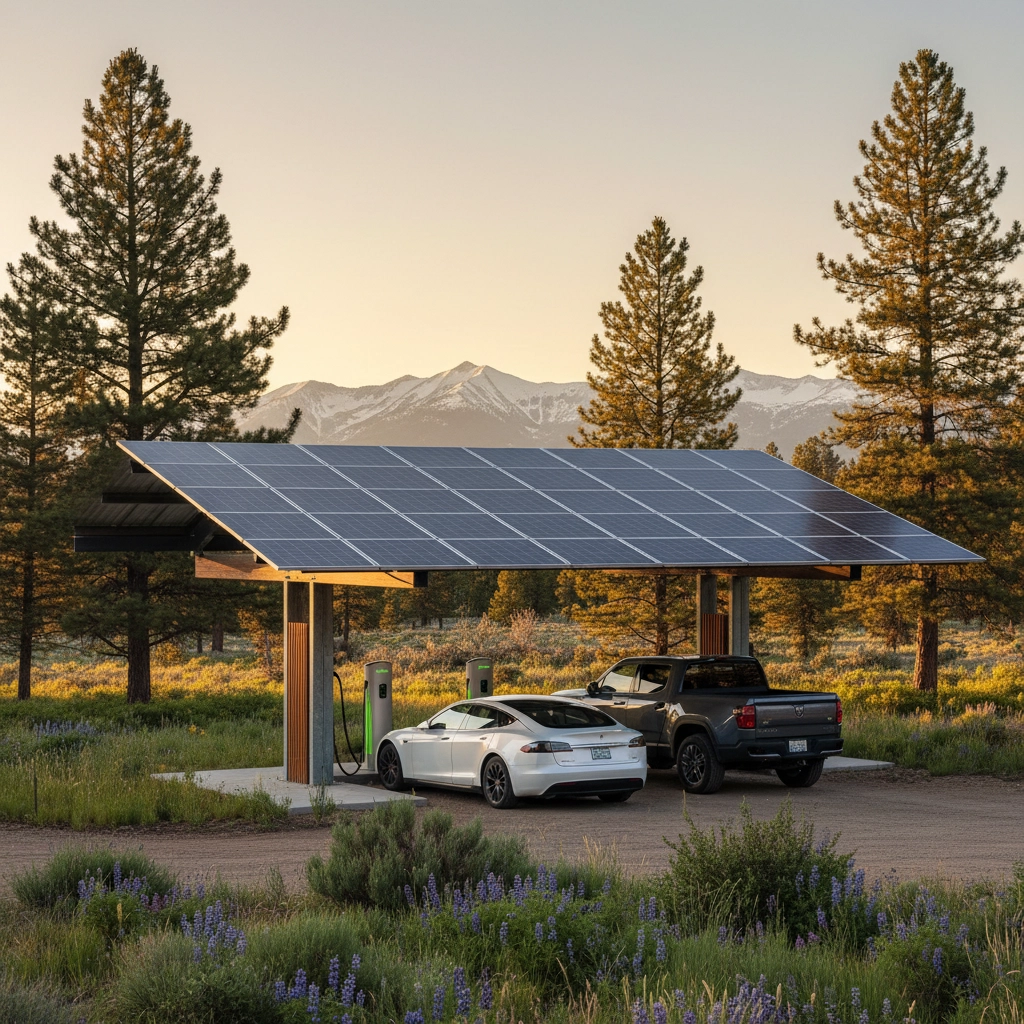
These installations generate clean electricity on-site, eliminating the need for new power lines or grid expansions that can disrupt sensitive ecosystems. The elevated solar panels actually protect vehicles and equipment from weather while creating minimal ground disturbance – a critical factor in protected lands where every square foot matters.
Currently, 27 national parks offer 100 EV charging stations to the public, but most rely on traditional grid connections. Parks like Yellowstone, Grand Canyon, and Yosemite are leading the charge, but they're just scratching the surface of what's possible with truly sustainable charging infrastructure.
Why Rangers and Park Staff Need Off-Grid Solutions
Park operations cover thousands of acres in remote locations where grid power simply doesn't exist. Rangers patrol backcountry areas, maintain trails in distant sectors, and respond to emergencies miles from the nearest power line. Electric vehicles make perfect sense for these operations – they're quiet, don't disturb wildlife, and produce zero emissions in sensitive environments.
But they need charging infrastructure that works everywhere.
Solar carports with battery storage systems provide that capability. A ranger station at the end of a dirt road can have the same reliable charging access as a visitor center in the developed zone. Maintenance crews can charge work trucks at remote project sites without running generators or extending power lines through pristine wilderness.
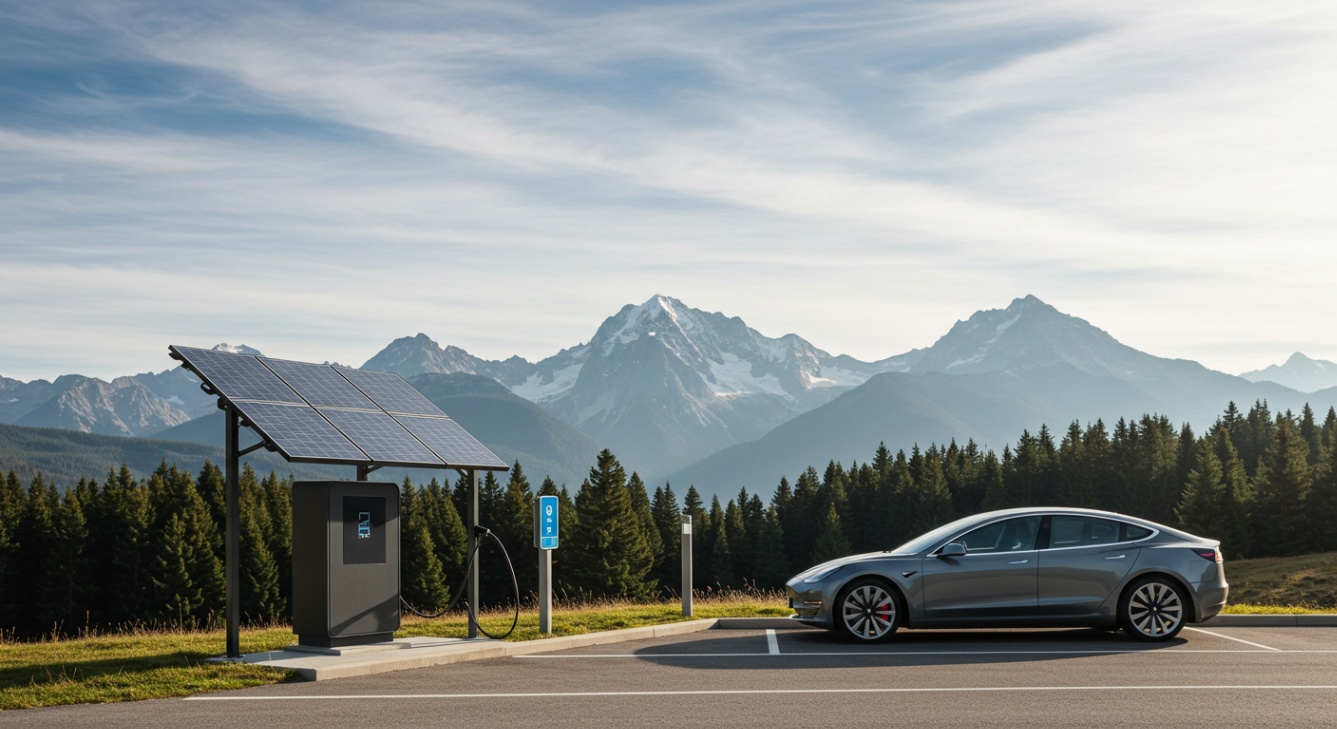
The dual-axis solar tracking systems maximize energy capture even in challenging mountain environments with varying sun angles throughout the day. Propane backup generators provide redundancy during extended cloudy periods, ensuring critical park operations never get stranded without power.
Protecting Ecosystems While Enabling Access
Traditional charging infrastructure requires significant site preparation – trenching for electrical lines, concrete pads for equipment, and often vegetation clearing for access and maintenance. In national parks, these impacts accumulate over time and can fragment habitats or alter natural drainage patterns.
Solar carports minimize these impacts through smart design. The elevated structure allows natural vegetation to grow underneath, maintaining habitat connectivity. Rainwater runoff is managed through the carport design rather than requiring separate drainage infrastructure. Wildlife can move freely under and around the installations without encountering barriers.
The modular design also means installations can be scaled to match actual usage without over-building infrastructure. A remote ranger station might need just two charging points under a small carport, while a popular trailhead could accommodate dozens of vehicles under an expanded installation.
Visitor Experience Enhancement
Eco-conscious visitors increasingly choose electric vehicles for their park adventures, but range anxiety often limits their exploration options. Solar-powered charging stations eliminate that concern while reinforcing the park's environmental stewardship message.
Imagine arriving at a trailhead to find your EV charging under clean solar power while you hike to a scenic waterfall. The installation demonstrates sustainable technology in action, becoming part of the educational experience rather than an industrial intrusion on the landscape.
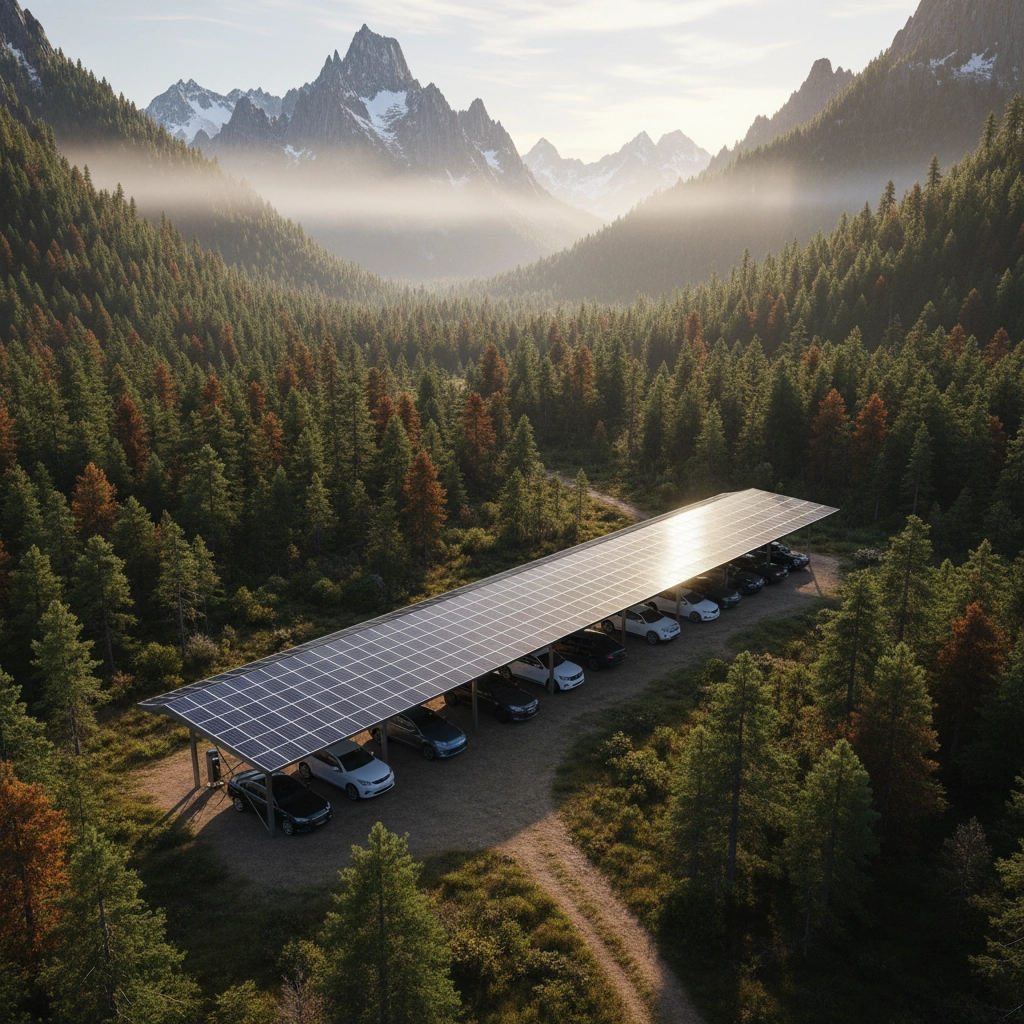
Visitor surveys consistently show strong support for renewable energy infrastructure in parks when it's designed to complement rather than compete with natural beauty. Solar carports achieve this balance by providing necessary services while showcasing clean technology that visitors can see working in real-time.
The Economics of Independence
Parks operating off-grid charging infrastructure eliminate ongoing utility costs that can strain limited budgets. Once installed, solar carports generate free electricity for decades with minimal maintenance requirements. Battery storage systems provide energy security during peak demand periods without demand charges or time-of-use rate premiums.
For parks in remote locations, the cost savings are even more dramatic. Extending grid power to distant facilities often costs hundreds of thousands of dollars per mile, with ongoing monthly charges that persist indefinitely. Solar carports with storage systems typically pay for themselves within five to seven years, then provide free energy for the remaining 20+ year system lifespan.
Federal funding through programs like the National Environmental Policy Act and various sustainability initiatives often covers significant portions of installation costs, making the economics even more attractive.
Future-Proofing Park Operations
Climate change is already affecting national parks through altered weather patterns, extended fire seasons, and changing visitor patterns. Electric vehicle infrastructure powered by renewable energy helps parks adapt to these challenges while reducing their own carbon footprint.
During wildfire evacuations, solar carports with battery storage can provide emergency power for communications equipment and charging stations for evacuation vehicles even when grid power is disrupted. The distributed nature of solar installations makes them more resilient than centralized power systems that can be knocked out by single points of failure.
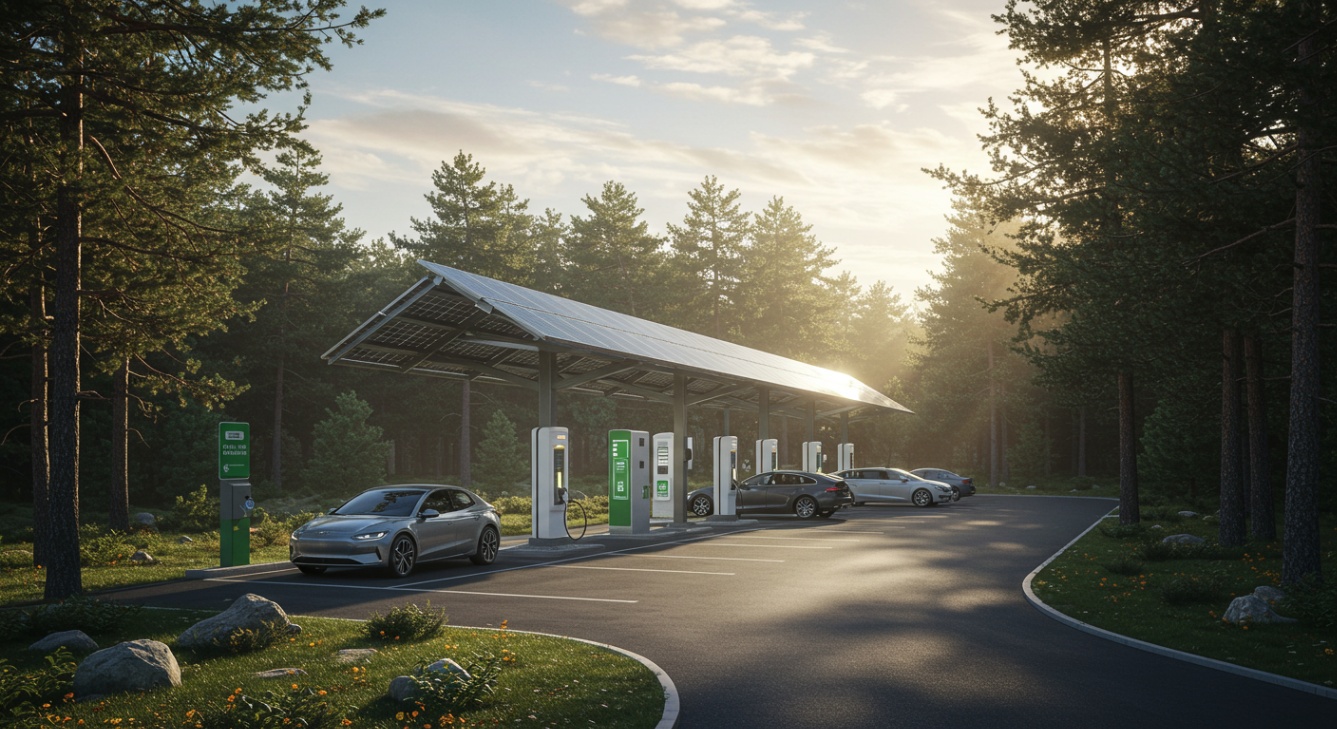
As vehicle electrification accelerates across all sectors – from personal cars to heavy-duty trucks – parks with robust charging infrastructure will be better positioned to transition their entire fleet to zero-emission operations. The infrastructure investment made today enables much broader electrification tomorrow.
Implementation Strategy for Park Managers
Successful solar carport installations in national parks require careful site selection and stakeholder engagement. Priority locations typically include:
- Main visitor centers and entrance stations
- Popular trailhead parking areas
- Staff housing and administrative facilities
- Maintenance yards and equipment storage areas
- Emergency services and fire station locations
Environmental assessments ensure installations comply with National Environmental Policy Act requirements while minimizing ecosystem impacts. Consultation with tribal authorities addresses cultural and historical considerations in areas with Native American significance.
The modular design allows phased installation that matches budget availability and usage growth. Parks can start with core facilities and expand coverage as demand increases and additional funding becomes available.
Leading the Way Forward
National parks have always served as laboratories for conservation innovation. From prescribed burning to wildlife corridor design, parks develop and demonstrate practices that eventually spread to other public lands and private conservation efforts.
Solar-powered EV charging infrastructure continues this tradition. Parks that implement these systems today become models for sustainable transportation access in sensitive environments. They demonstrate that environmental protection and modern convenience aren't competing goals – they're complementary objectives that smart technology can achieve simultaneously.
The rangers, maintenance crews, and millions of visitors who experience these installations firsthand become advocates for similar projects in their home communities. The ripple effect extends far beyond park boundaries, accelerating the transition to clean transportation across the country.
Ready to explore how solar carports can transform EV access in your park or protected area? Visit EV Across USA to learn more about our off-grid charging solutions designed specifically for sensitive environmental locations.

